How to Create a Cozy Drawing Space at Home
Interior meets creativity in the most calming way
There is something quietly powerful about having a place that gently invites you to sit down and draw, a space that does not demand anything from you but instead offers a sense of ease the moment you look at it, almost like a soft pause in the middle of a busy day.
It does not have to be a perfect studio or a carefully designed Pinterest room with expensive furniture and endless supplies, because what truly matters is the feeling you get when you enter that space, when you sit down, when you open your sketchbook and realize that everything already feels calm, simple and ready.
A cozy drawing space is not built through effort or perfection, but through small, intentional choices that make drawing feel natural, almost effortless, as if it simply belongs in your daily life instead of being something you have to plan or push yourself to do.
In this guide, you will learn how to create exactly that kind of space, one that feels warm, aesthetic and deeply inviting, so that returning to it becomes something you genuinely look forward to rather than something you postpone.
Start with a Calm Base
Before you think about decoration or details, it helps to begin with a foundation that already feels quiet and balanced, because the base of your space influences everything that comes after it.
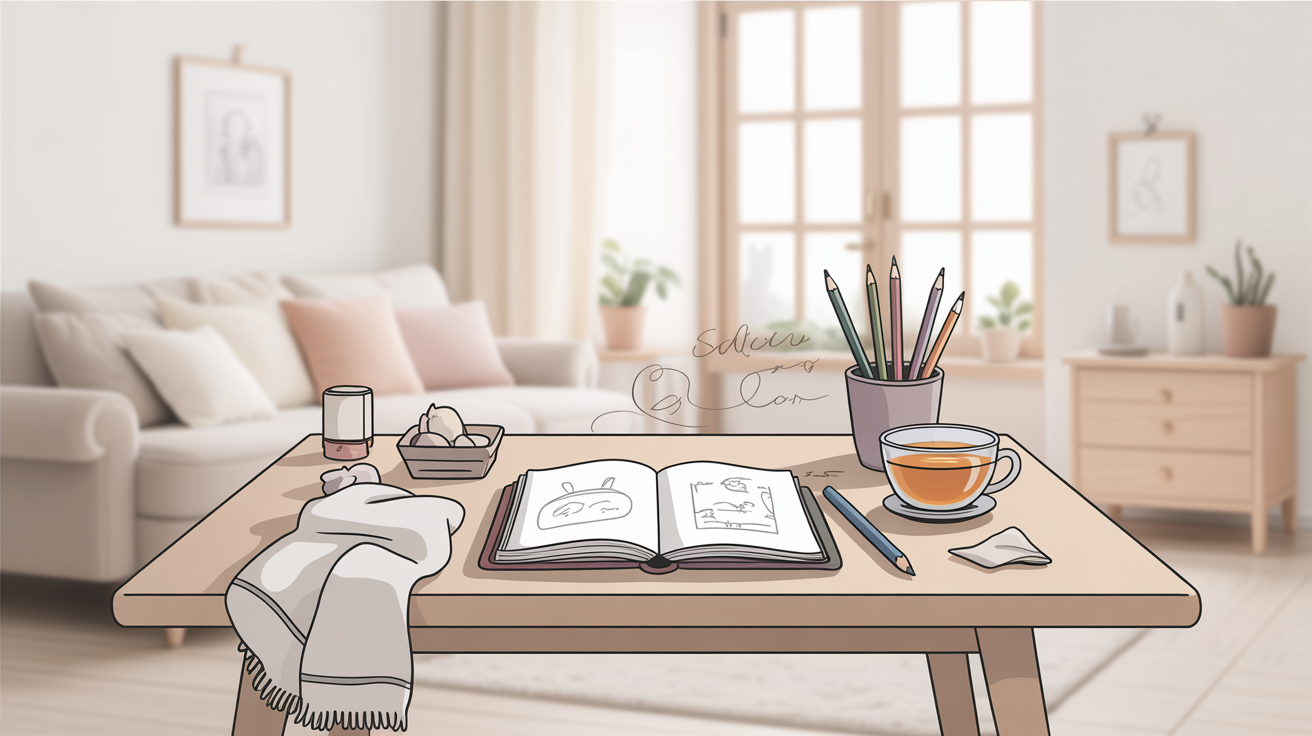
Look around your home and notice where the atmosphere feels naturally calm, whether it is a small desk near a window, a corner in your living room that feels a little more secluded, or even a simple table in your bedroom that is not constantly in use.
Instead of trying to transform the space completely, focus on simplifying it in a way that allows your mind to slow down as well, because visual clarity often leads to mental clarity.
Soft, neutral colors tend to work especially well here, since they create a gentle backdrop that does not compete with your drawings, but instead supports them in a subtle and almost invisible way.
Think of warm whites, soft beige tones, light wood surfaces or muted earthy colors that feel natural and easy on the eyes, because these tones help create a sense of quiet continuity rather than visual distraction.
What matters most is that your surface feels clear and usable without extra effort, that the light feels comfortable rather than harsh, and that your seating allows you to relax instead of constantly shifting around.
When your environment feels calm, your mind naturally follows that rhythm, and drawing becomes something that fits into that calmness instead of fighting against it.
Let Natural Light Shape the Mood
Light has a much stronger impact on your creative experience than most people realize, because it subtly influences both your mood and your focus without you even noticing it.
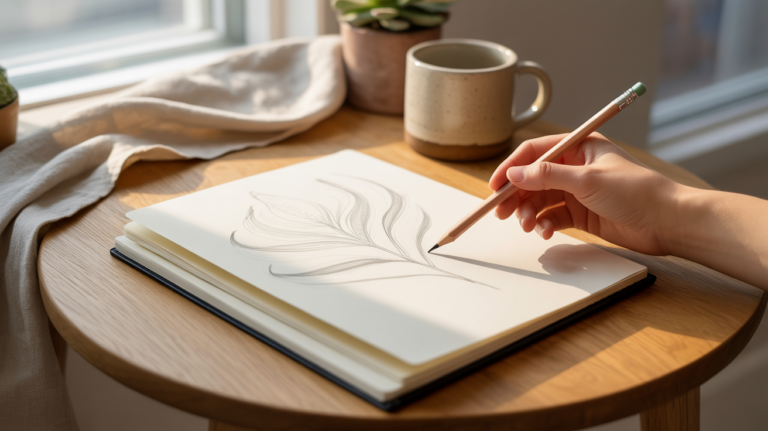
If you have the option, placing your drawing space near a window can completely change how the space feels throughout the day, especially when soft morning light or warm afternoon light gently fills the area and creates a natural sense of calm.
This kind of light does not just help you see better, it also creates an atmosphere that makes drawing feel slower, softer and more enjoyable, as if time itself moves a little differently in that space.
You do not need perfect lighting conditions for this to work, because even a small amount of natural light can already create a noticeable difference in how inviting the space feels.
If natural light is limited, you can recreate a similar feeling by choosing warm, soft lighting instead of cold, bright light, since warm tones tend to feel more relaxing and less clinical, which makes it easier to stay in a creative flow.
The goal is not brightness, but atmosphere, because a space that feels good to sit in will always support your creativity more than one that simply looks functional.
Keep Your Tools Visible and Ready
One of the most common reasons why drawing gets pushed aside is not a lack of motivation, but small barriers that make starting feel more complicated than it should be.
When your tools are stored away, hidden in drawers or scattered across different places, drawing turns into a process that requires preparation, and that alone can be enough to stop you before you even begin.
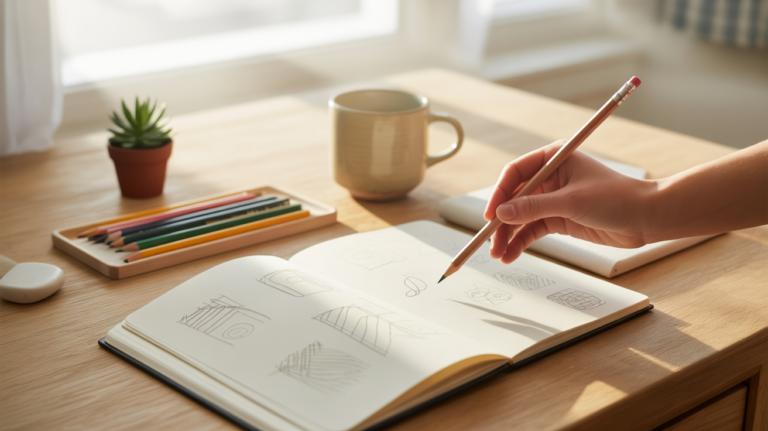
Instead, try to make your tools part of your space in a way that feels natural and visually pleasing at the same time, so that everything you need is already within reach the moment you feel like drawing.
Keeping a sketchbook, a pencil or pen, and a simple eraser visible on your desk creates a subtle invitation, because it removes the step between thinking about drawing and actually doing it.
You can use small containers, trays or cups to organize your materials in a way that still feels aesthetic, allowing your tools to become part of the overall atmosphere instead of something you need to hide.
When everything is easy to access and already in place, drawing stops feeling like a task you have to start and becomes something you naturally fall into.
Add Soft, Cozy Elements That Support the Mood
A cozy drawing space is not just about functionality, it is about creating an environment that feels comfortable enough to stay in for longer than you originally planned.
Soft elements play an important role here, because they add warmth and texture without overwhelming the space visually, which helps maintain that calm, balanced feeling.
You might add a soft cushion to your chair so that sitting down feels immediately more inviting, or place a light blanket nearby that makes the space feel a little more personal and relaxed.
A small rug under your desk can subtly define the area and make it feel more like a dedicated space, even if it is just a corner of a larger room.
Materials like linen or cotton tend to work especially well because they feel natural and understated, blending into the environment instead of standing out too strongly.
Even small details like a candle or a warm light source can shift the entire mood, creating a sense of calm that makes it easier to slow down and focus.
The key is not to decorate for the sake of decoration, but to create a feeling of comfort that gently supports your creative process.
Bring a Touch of Nature Into Your Space
Adding natural elements can make your drawing space feel more alive and grounded, which often helps create a deeper sense of calm and presence while you draw.
You do not need a large setup or many plants for this to work, because even a single small plant can already change how the space feels.
Greenery introduces a soft contrast to the structured elements of your desk and tools, making the space feel less rigid and more organic.
If you prefer something even simpler, dried flowers in a small vase or a natural branch can add texture and subtle visual interest without requiring maintenance.
These elements work especially well because they do not demand attention, but instead quietly enhance the atmosphere in a way that feels effortless.
Over time, these small natural details can make your space feel more personal and more connected to your daily life.
Create a Personal Atmosphere Without Overloading the Space
Your drawing space should reflect your personality in a way that feels inspiring but not overwhelming, because too many visual elements can easily distract from the calmness you are trying to create.
Instead of filling the space with many decorations, focus on a few meaningful items that genuinely inspire you or make you feel connected to your creative process.
This could be a favorite art print, a few of your own sketches pinned to the wall, or a simple mood board that captures the kind of style you enjoy.
The important part is to keep the overall visual balance intact, so that these elements enhance the space instead of competing for attention.
When everything feels intentional and uncluttered, your focus naturally shifts back to drawing rather than constantly taking in new visual input.
Make It Effortless to Sit Down and Start
At the heart of every cozy drawing space is one simple idea, which is that it should be easy to use at any moment without preparation or hesitation.
If your setup requires cleaning, organizing or rearranging before you can even begin, it creates resistance that slowly builds into avoidance over time.
By keeping your sketchbook within reach, your tools in the same place and your surface ready to use, you remove that resistance completely.
This makes it possible to sit down and start drawing in just a few seconds, which is often the difference between doing it and postponing it.
When drawing becomes the easiest option in that moment, it naturally becomes part of your routine without needing discipline or motivation.
Build a Gentle Drawing Ritual Around Your Space
A space becomes meaningful not just through how it looks, but through how often you return to it and what you associate with it over time.
You do not need a strict routine or a fixed schedule to build this connection, because even small, consistent actions can shape the way you experience the space.
For example, you might sit down with a cup of tea, open your sketchbook and spend a few quiet minutes drawing without any expectations or goals.
These moments do not need to be long or productive, because their value lies in the repetition and the feeling they create.
Over time, your drawing space becomes linked to calm, creativity and a sense of pause, making it easier and more natural to return to it again and again.
Your Cozy Drawing Space
Creating a cozy drawing space is not about achieving a perfect aesthetic or following a specific style, but about building a place that feels good to return to, a place that quietly supports your creativity without asking for anything in return.
Start with what you already have and make small adjustments over time, allowing the space to evolve naturally instead of trying to complete it all at once.
Pay attention to how it feels rather than how it looks, because the right atmosphere will always matter more than visual perfection.
And most importantly, use the space regularly, even if it is just for a few minutes at a time, because that is what transforms a simple corner into a meaningful part of your daily life.
In the end, the most beautiful drawing space is not the one that looks the best, but the one you actually sit down in, again and again, without hesitation.