10 cat watercolor ideas
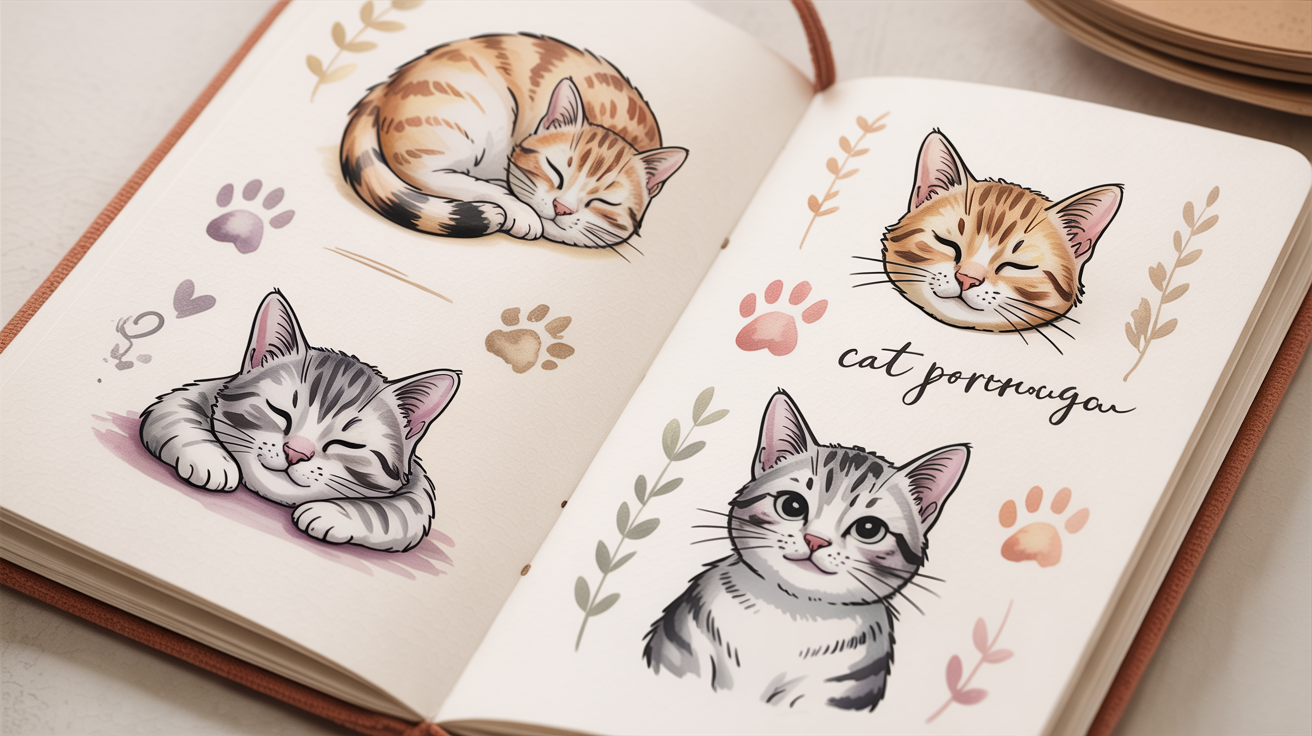
The gentle gradient of a watercolor painting can create a calm atmosphere in any space. With simple cat motifs, a sense of serenity emerges that blends beautifully into home or garden ideas. Within these quiet images, everyday life is met with a more mindful perspective, and painting becomes a moment of relaxation. Each brushstroke invites you to stay present and discover a soft, delicate aesthetic.
How to start drawing
The first step into a new hobby can feel difficult when you are unsure where to begin. A minimalist approach makes the process easier and removes pressure. Focus on a few shapes and colors and allow yourself to experiment freely. This way, you will quickly see results and feel motivated to continue.
- Basic cat shape (circle for the head, oval for the body)
- A few color tones with soft transitions
- Loose brushstrokes without striving for perfection
Simple Supplies for This Style
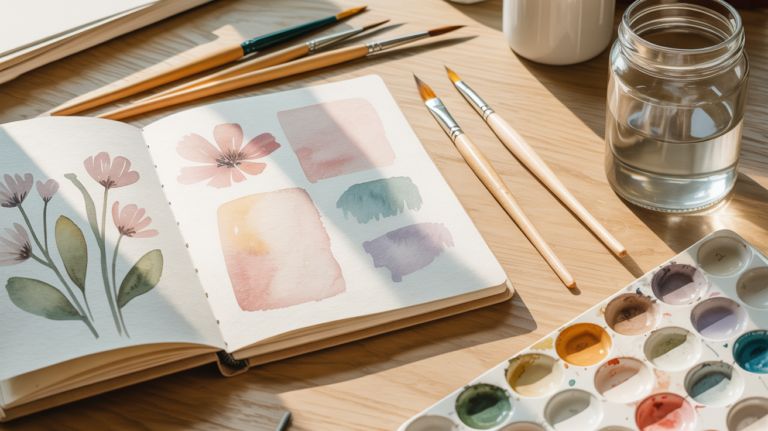
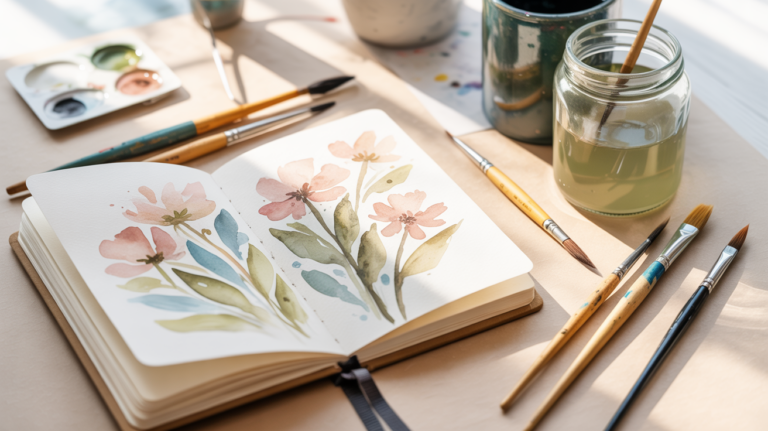
A light watercolor paper, a soft round brush, and a small palette with three to five colors are enough to get started. A pencil for light sketching completes your setup.
Sleeping Silhouette
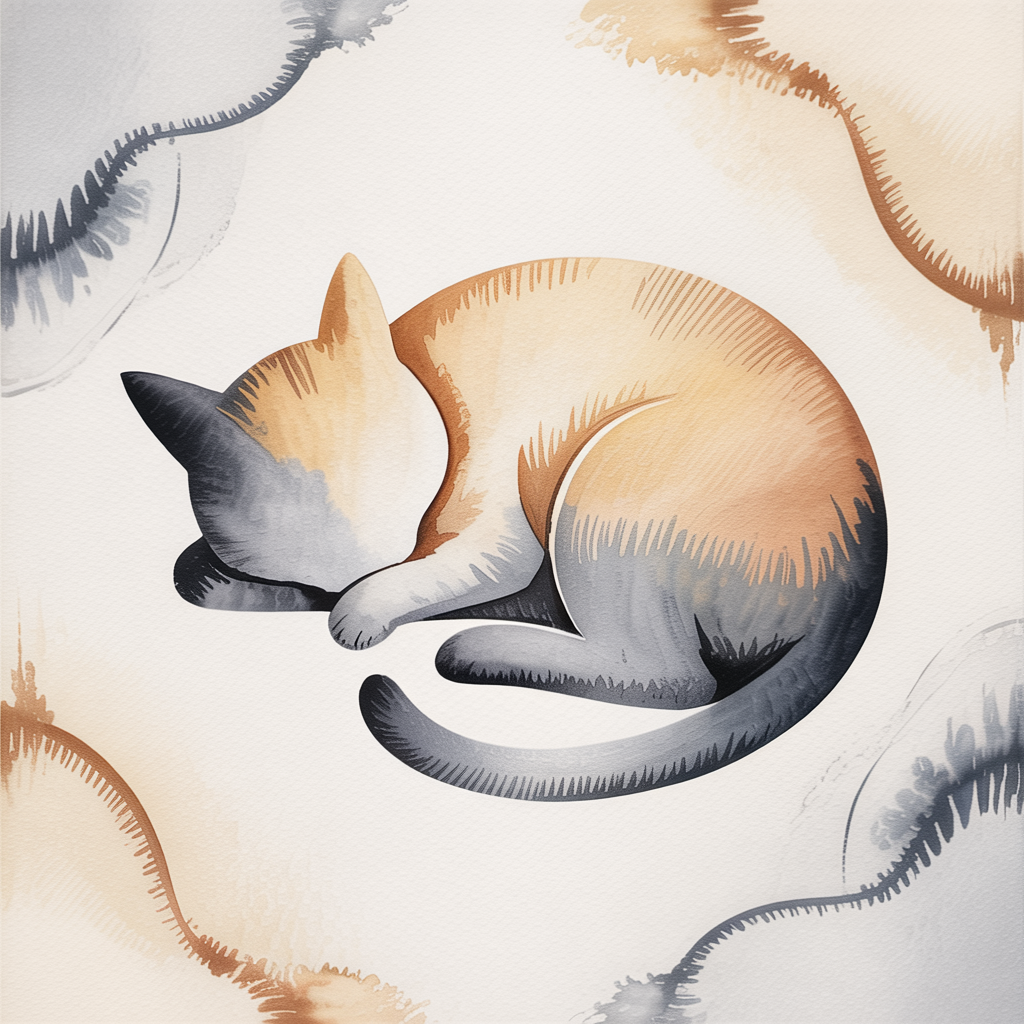
This idea shows a cat resting in a relaxed position, reduced to clean outlines. The silhouette is painted in a single tone with a soft gradient, creating a calming effect while keeping the form elegant and recognizable. This motif works especially well for small paintings or cards.
The simple contour draws attention to the flowing color gradient and gives the image a peaceful mood. At the same time, the illustration feels modern and minimal.
Painting steps: 1. Lightly sketch the outline of the sleeping cat with a pencil. 2. Wet the inner area with clean water. 3. Apply a light color at the head and pull it toward the body. 4. Add a darker tone along the edge and let the colors blend softly.
Cat Head with Floral Crown
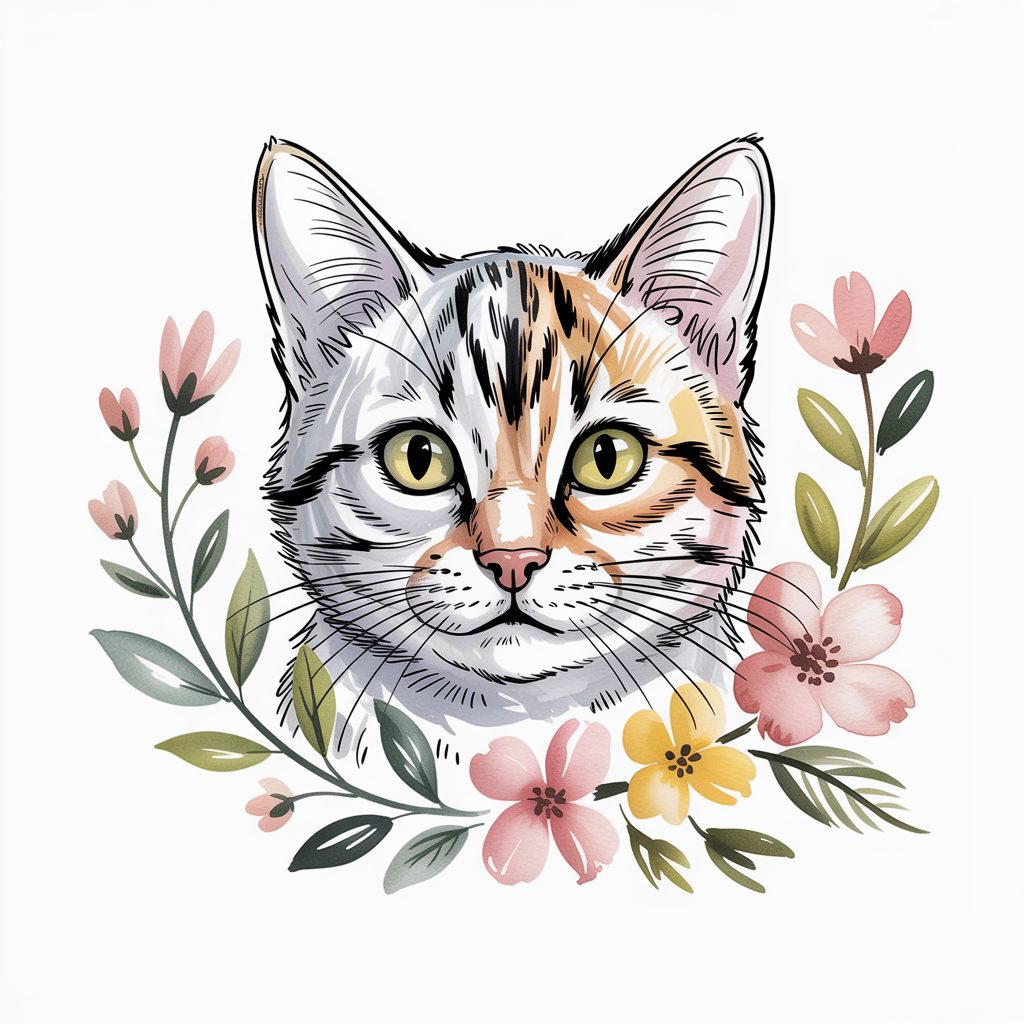
A delicate cat head framed by small flowers feels like a graphic portrait. The eye area remains open and gains depth with a light gray wash. The flowers are painted in soft pastel tones, adding subtle color accents. This motif works well as decoration in an entryway.
The combination of animal and floral elements creates a light and airy feeling. The fine blossoms frame the face harmoniously and add an elegant contrast.
Painting steps: 1. Lightly sketch the head shape and flowers. 2. Wet the cat shape and apply a soft beige tone. 3. Paint each petal in gentle pink and yellow shades. 4. Add a light gray wash to define the eyes.
Minimalist Cat Paw
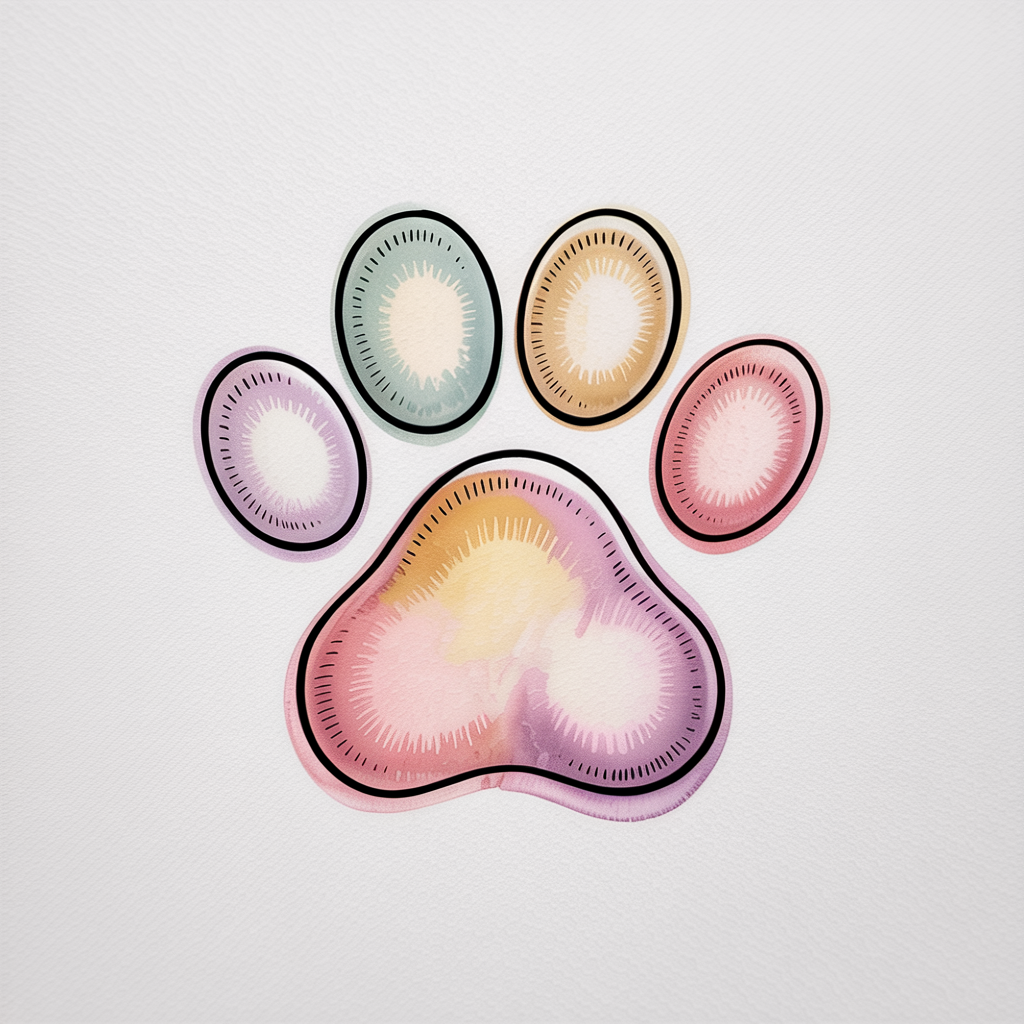
The paw as a single motif appears clear and expressive. Each pad is painted as a small round color spot. The outline is intentionally loose with only a few strokes. This image radiates subtlety and harmony.
With its reduced form, the focus lies on the soft color and brushwork. The simplicity makes it quick and relaxing to paint.
Painting steps: 1. Draw four small circles for the toes and one larger for the main pad. 2. Wet each circle and fill it with a pastel tone. 3. Use the brush tip to draw fine outlines. 4. Let the colors blend slightly.
Cat Outline with Gradient Fill
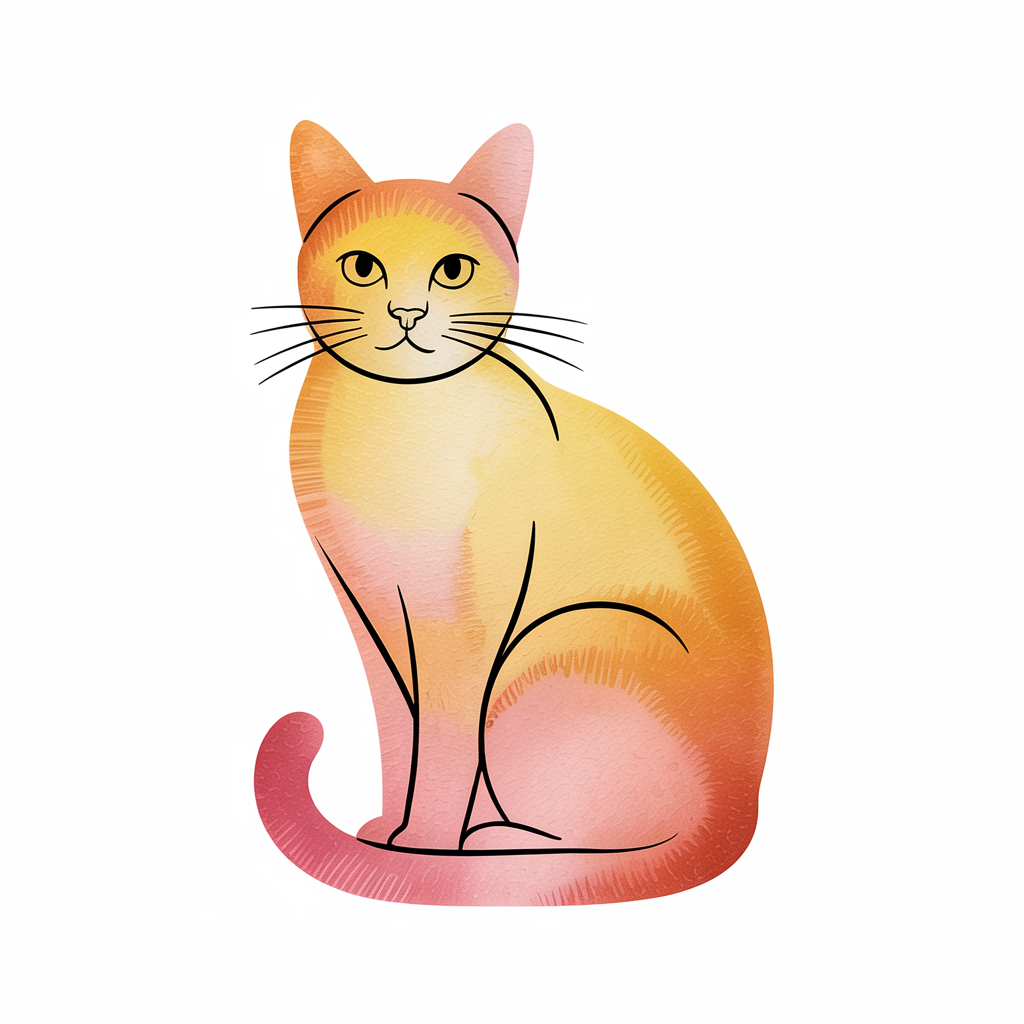
A simple outline of a sitting cat is filled with a gradient from warm orange to soft yellow. The transition reflects the shift from morning to evening light. This motif works beautifully as a focal point on a wall and creates a calm, almost meditative feeling.
The soft gradient adds a lively touch while the overall design remains clean and understated.
Painting steps: 1. Draw a simple cat outline. 2. Wet the inside evenly. 3. Apply orange at the head and pull it toward the back. 4. Add yellow at the bottom and blend the tones together.
Cat Portrait with Watercolor Dots
Instead of filling shapes, this portrait is created with small dots in shades of blue and green. The dots suggest the eyes, ears, and muzzle. The result feels playful and artistic, with a unique texture that adds depth.
This dotted technique creates movement and leaves room for interpretation while keeping the subject recognizable.
Painting steps: 1. Lightly sketch the portrait. 2. Place colored dots along the features and contours. 3. Vary the size of the dots for depth. 4. Let some dots softly bleed into the paper.
Abstract Cat Form
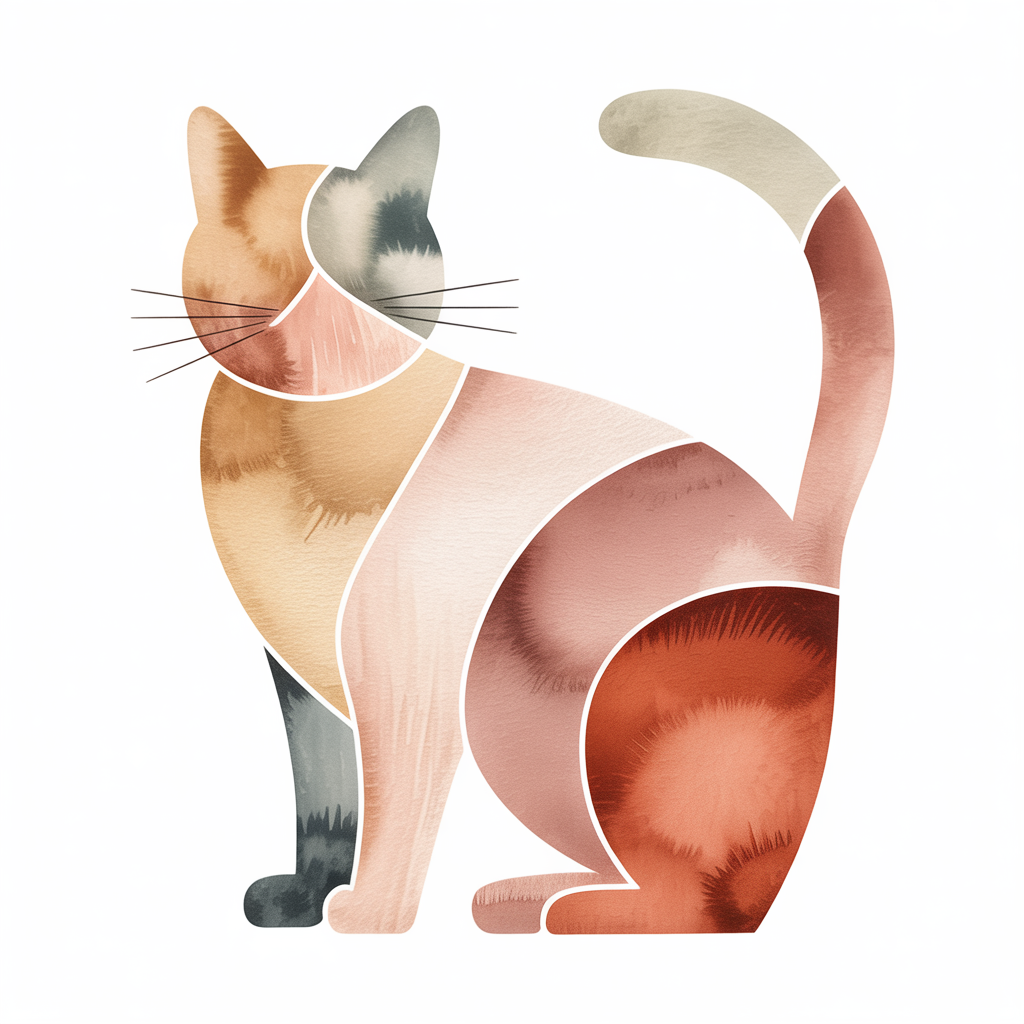
Here, the cat is represented as a composition of color fields and lines. The form appears fragmented, almost like a puzzle. You can choose harmonious tones or strong contrasts. The result is a modern artwork with a cat theme.
This abstract style encourages creativity and moves away from traditional representation, resulting in a unique and expressive image.
Painting steps: 1. Divide the cat shape into sections. 2. Assign a different color to each section. 3. Wet one section at a time and fill it. 4. Add clean lines between sections.
Cat Silhouette with Reflection
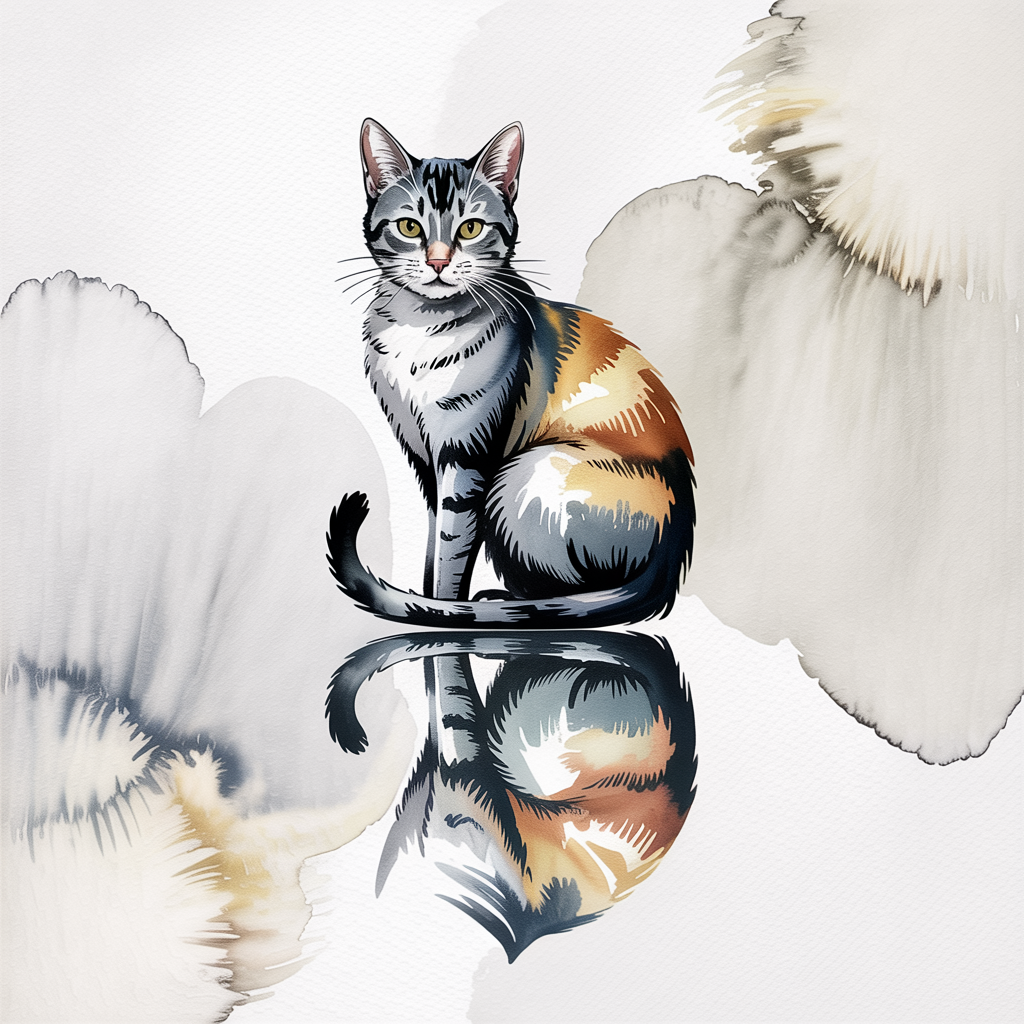
Draw a sitting cat at the top of the page and mirror it below. The reflection is created with a soft gray wash. The play of light and shadow feels poetic and creates a calm, balanced composition.
The reflection adds a sense of stillness, like water, while keeping the design minimal.
Painting steps: 1. Lightly sketch the cat. 2. Fill the silhouette with a warm gray. 3. Draw an inverted version below. 4. Fade the reflection with more water.
Cat Portrait with Splashes
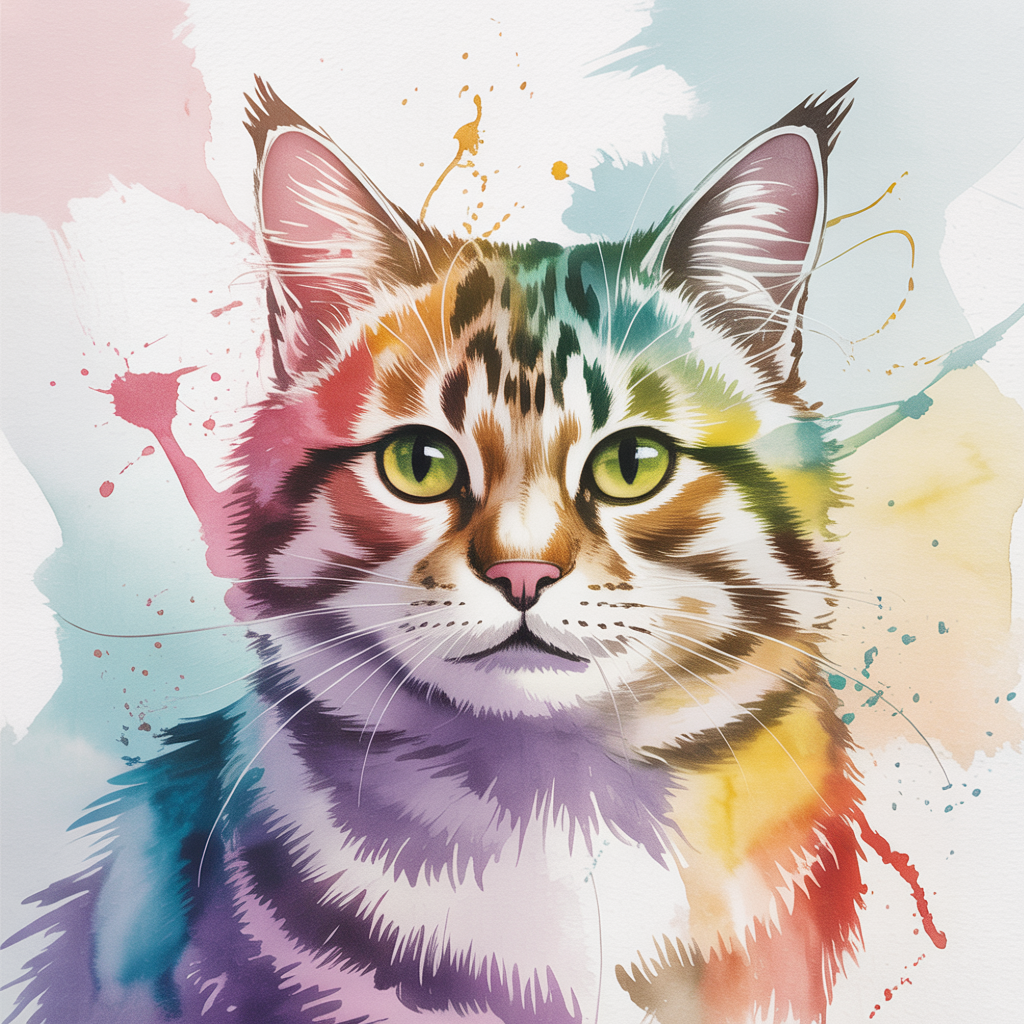
Start with a soft, unfinished portrait and add color splashes afterward. The splashes can vary in intensity, creating energy and movement. The image feels spontaneous yet calm due to the soft watercolor texture.
The mix of smooth areas and dynamic splashes creates an interesting contrast and a modern look.
Painting steps: 1. Lightly sketch the portrait. 2. Fill it with two soft colors. 3. Dip your brush in paint and flick it across the paper. 4. Vary distance and pressure for different effects.
Cat Head in Warm Autumn Colors
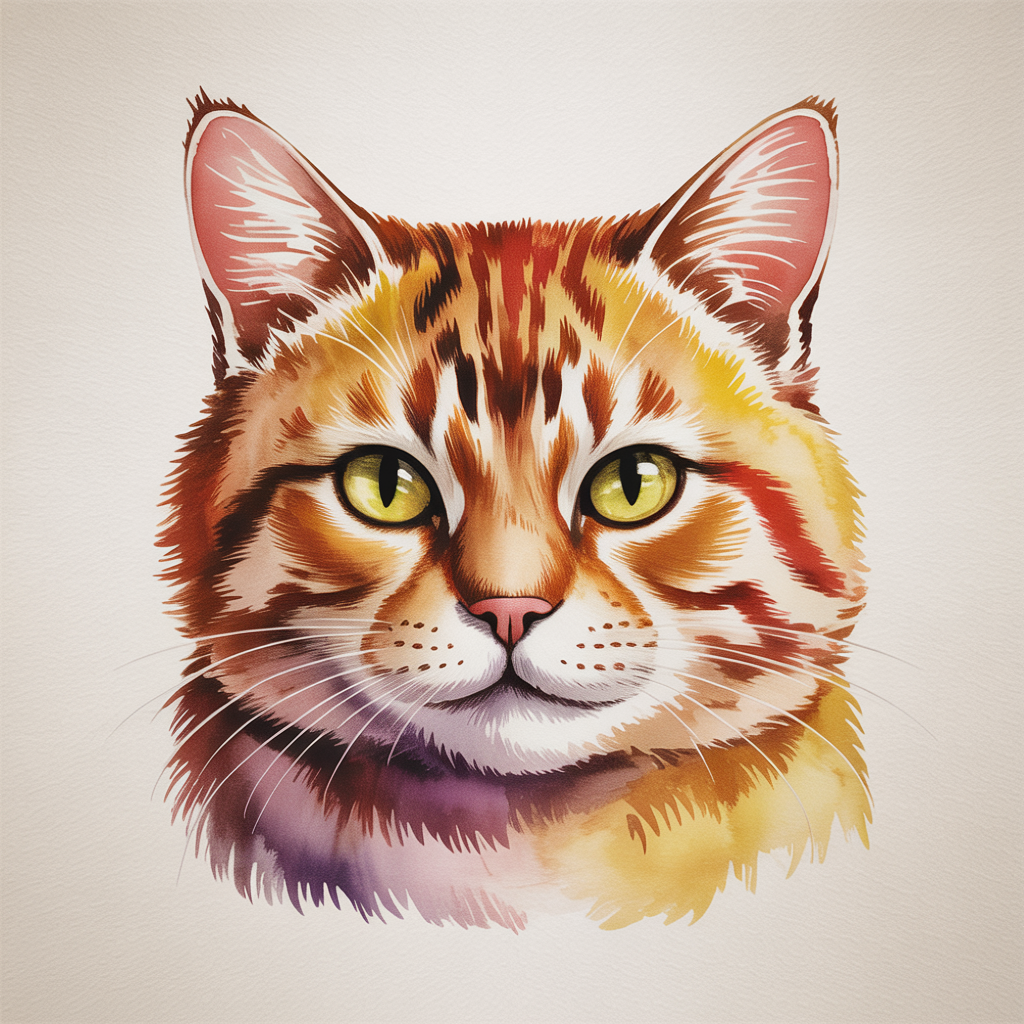
This head is painted in yellow, orange, and red tones, reminiscent of falling leaves. The colors blend softly, and a light texture in the fur area adds depth. The result is warm and inviting.
The autumn palette creates a calm, cozy feeling while keeping the image bright and friendly.
Painting steps: 1. Sketch the head and facial features. 2. Wet the area and apply yellow first. 3. Add orange where it transitions into red. 4. Use the brush tip to create fine fur lines.
Cat Profile in Rainbow Gradient
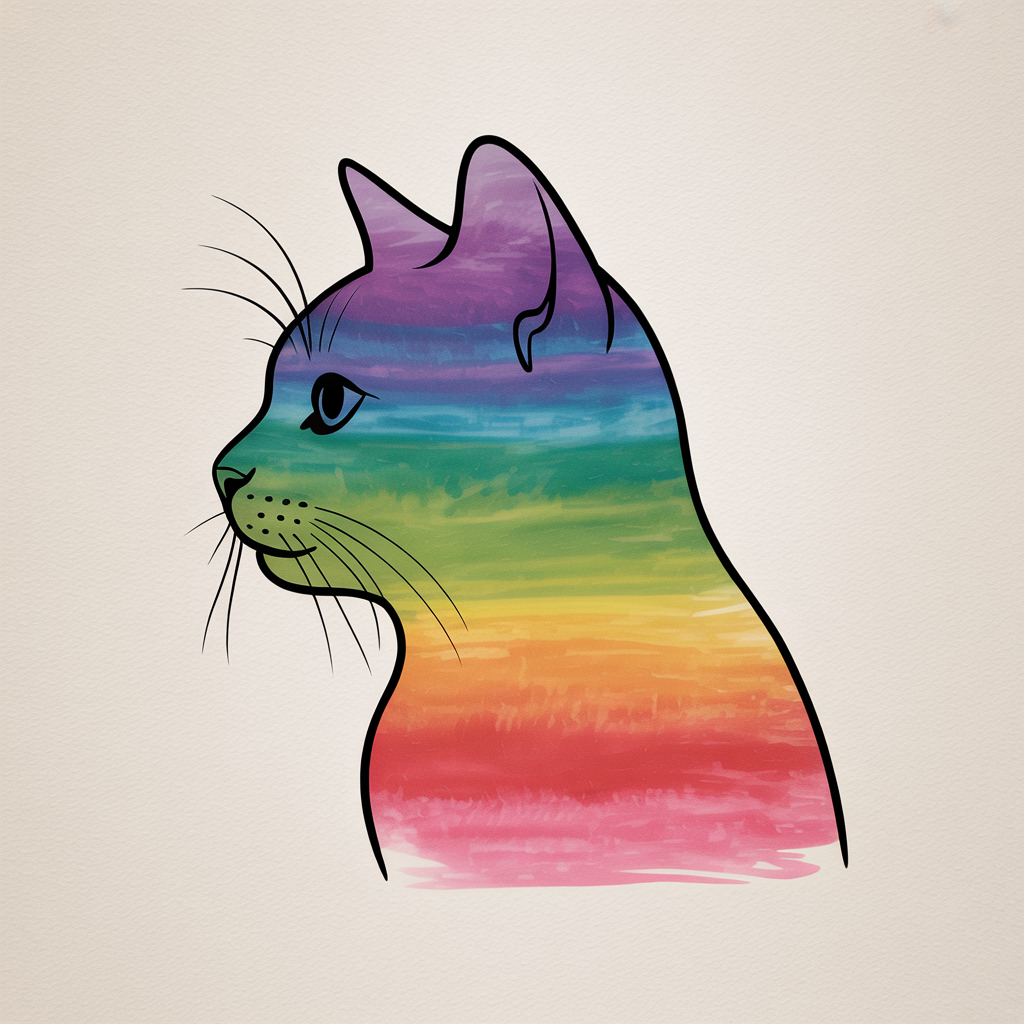
Draw a side profile of a cat and fill it with a rainbow gradient from violet to red. The colors flow smoothly into each other, bringing a joyful touch. The simple profile contrasts with the vibrant color choice.
The rainbow gradient adds harmony and brightness while remaining soft through gentle blending.
Painting steps: 1. Lightly sketch the profile. 2. Wet the entire shape. 3. Apply violet at the head and pull it across. 4. Add blue, green, yellow, orange, and red in smooth transitions.
How to use
These small watercolor motifs can be used as postcards, bookmarks, or framed artwork. You can pin them to a board or combine them into a small gift set. They also look lovely on plant boxes in a garden setting. Try different formats to discover your personal style.
Common mistakes
A common mistake is using too much water, which causes colors to spread uncontrollably. Do not skip a light sketch, as it helps maintain proportions. Allow colors to dry between layers. Avoid using too many colors at once, as this can reduce the calm effect of the painting.
FAQ
Question: Do I need special watercolor paper?
Answer: Watercolor paper with at least 200 gsm helps prevent warping and is recommended. For practice, beginner paper is also fine.
Question: How many colors do I need?
Answer: Three to five colors are enough. You can mix primary colors to create many additional shades.
Question: Can I frame these paintings?
Answer: Yes, light wooden frames enhance the soft look of watercolor art and protect the paper.
Quiet Watercolor Dreams
You might save these ideas for later or start your first painting today. Let the soft color transitions settle and enjoy the calm moment. These delicate cat motifs invite you to explore new compositions again and again. Each brushstroke can become a small, mindful escape.