How to Choose the Right Watercolor Paper: A Beginner’s Guide
When you first start painting with watercolors, it’s easy to focus on choosing the perfect paints, brushes, and colors. But there’s one essential supply that can make an even bigger difference to your results: watercolor paper.
Have you ever watched a watercolor tutorial, followed every step carefully, and still ended up with muddy colors, uneven washes, or paper that curled as soon as you added water? Your technique might not be the problem. The paper you’re using could be making things much harder than they need to be.
Watercolor paper isn’t just a surface to paint on. It controls how water moves, how pigments settle, how easily colors blend, and how much time you have to work before the paint dries.
The good news is that you don’t need to buy the most expensive professional paper to create beautiful watercolor paintings. You simply need to understand what makes different papers suitable for different techniques.
In this beginner’s guide, we’ll explore watercolor paper weights, textures, materials, and sizing. You’ll also learn when to choose cotton or cellulose paper, how to match your paper to your painting style, and which options are worth trying first.
Why Watercolor Paper Matters More Than You Think
Unlike pencils or colored markers, watercolor paints rely on water to carry pigments across the surface. That means the paper needs to handle moisture without immediately breaking down, warping excessively, or absorbing paint in unpredictable ways.
Regular printer paper, for example, is usually too thin and isn’t designed for watercolor painting. It can buckle almost immediately, causing water and pigment to collect in the wrinkles.
Proper watercolor paper is manufactured to withstand repeated wetting and drying. Depending on its composition and surface treatment, it can support smooth gradients, delicate details, dramatic textures, and multiple transparent layers.
The right paper helps you:
- Create smoother color transitions and more even washes.
- Control the movement of water and pigment.
- Add layers without damaging the paper surface.
- Lift or soften colors when corrections are needed.
- Reduce excessive buckling and unwanted puddles.
- Achieve the texture and finish you want in your artwork.
Before choosing a paper, it helps to understand four important characteristics: weight, texture, fiber composition, and sizing.
1. Understanding Watercolor Paper Weight
Watercolor paper weight describes how much a standard area of paper weighs, rather than its exact thickness. It’s commonly expressed in grams per square meter (gsm) or pounds (lb).
In general, heavier watercolor paper is more resistant to buckling when wet, although fiber composition, sizing, and manufacturing also influence how it behaves.
Here are the most common watercolor paper weights you’ll encounter.
| Paper weight | Best for | What to expect |
|---|---|---|
| 190 gsm / 90 lb | Quick sketches, light washes | Affordable and lightweight, but prone to buckling |
| 300 gsm / 140 lb | Everyday watercolor painting | A versatile balance between durability and cost |
| 425 gsm / approximately 200 lb | Larger paintings, wetter techniques | More substantial paper with good resistance to warping |
| 640 gsm / 300 lb | Heavy washes, extensive layering | Very sturdy and often usable without stretching |
Pound ratings are traditional paper classifications. The conversions shown are approximate, and manufacturers may use slightly different nominal weights.
Is 190 gsm watercolor paper good enough?
Yes, but it comes with limitations.
Lightweight watercolor paper can be useful for practicing simple brushstrokes, experimenting with color combinations, and creating quick sketches with relatively little water.
However, if you enjoy wet on wet techniques or painting large backgrounds, 190 gsm paper may buckle significantly. That can lead to uneven drying, unexpected blooms, and puddles that disrupt your painting.
You can reduce some of these problems by securing your paper to a rigid board with suitable tape or stretching it, provided the paper is designed to tolerate the process.
Why 300 gsm watercolor paper is ideal for beginners
For most beginners, 300 gsm (140 lb) watercolor paper is the best starting point.
It’s substantial enough for common watercolor techniques while remaining relatively affordable and widely available.
You can use it for botanical illustrations, landscapes, greeting cards, loose floral paintings, and beginner exercises.
It can still buckle when heavily saturated, particularly when used as a loose sheet. But compared with lighter papers, it generally provides a much more manageable painting experience.
When should you choose 640 gsm paper?
Very heavy watercolor paper is particularly helpful for artists who use a lot of water, work on large paintings, or repeatedly glaze their artwork.
Its sturdy construction makes it less likely to distort under wet conditions.
The disadvantages are its higher cost, heavier feel, and the fact that beginners rarely need this level of thickness for everyday practice.
My recommendation: Start with 300 gsm watercolor paper rather than spending your entire supply budget on extra heavy sheets.
2. Watercolor Paper Textures: Hot Press, Cold Press, and Rough
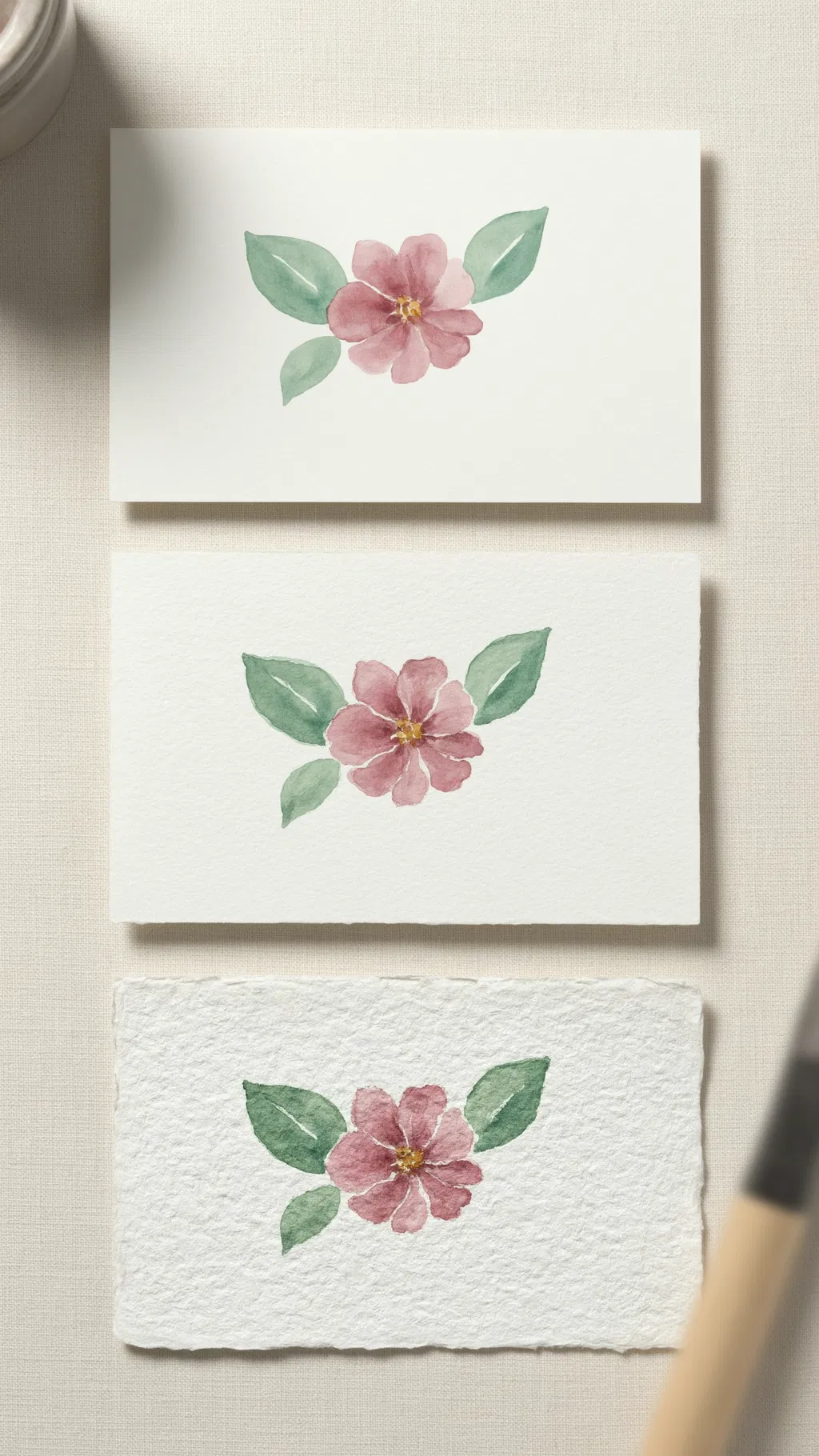
Watercolor paper comes in different surface textures, and the texture you choose can completely change the appearance of your painting.
The three main options are hot pressed, cold pressed, and rough paper.
Hot pressed watercolor paper: Best for detailed artwork
Hot pressed watercolor paper has a relatively smooth surface created through the paper manufacturing process.
Because there is very little visible grain, your brush can move across the paper with minimal interruption.
This is particularly helpful when creating tiny details, thin stems, delicate flower petals, or precise illustrations.
Best uses for hot pressed paper:
- Botanical watercolor illustrations
- Watercolor lettering and calligraphy
- Detailed animal illustrations
- Small paintings with fine outlines
- Mixed media projects using ink and watercolor
One thing to remember is that smooth paper doesn’t automatically make watercolor easier to control. Some hot pressed papers allow water to remain on the surface longer, making certain washes more challenging for beginners.
On other papers, paint can appear to settle or dry more quickly. Much depends on the sizing and brand.
If you prefer precise painting and illustrations, hot pressed paper is worth trying.
Cold pressed watercolor paper: Best for beginners
Cold pressed watercolor paper, often labeled NOT in British watercolor terminology, has a gently textured surface.
It’s the most versatile option for many painting styles and is particularly popular among beginners.
The slightly uneven surface gives watercolor paintings a beautiful, organic appearance without introducing as much pronounced grain as rough paper.
Cold pressed paper is excellent for practicing wet on wet painting, color blending, glazing, and creating soft transitions between shades.
Best uses for cold pressed paper:
- Loose watercolor flowers
- Landscapes and nature studies
- Beginner watercolor exercises
- Greeting cards
- Everyday watercolor sketching
- Soft skies and background washes
For a first watercolor paper purchase, I would choose 300 gsm cold pressed paper.
It gives you the freedom to explore a wide range of techniques without committing to a particularly specialized surface.
Rough watercolor paper: Best for expressive texture
Rough watercolor paper has a pronounced, irregular texture that can create beautiful effects with very little effort.
When you drag a relatively dry brush across the surface, pigment catches on the raised areas while the little valleys remain lighter.
This creates a broken, textured effect that looks wonderful in landscapes.
Think of rocky mountains, old stone walls, tree bark, waves, or sunlit fields.
Rough paper can also enhance the appearance of granulating watercolor paints, although the final result depends on the pigment and paper combination.
Best uses for rough paper:
- Mountain landscapes
- Ocean scenes and crashing waves
- Trees, foliage, and natural textures
- Expressive abstract paintings
- Dry brush techniques
The tradeoff is that tiny details and smooth pen lines can be more difficult to achieve.
Rough paper isn’t necessarily harder to paint on. It simply encourages a different style.
3. Cotton vs. Cellulose Watercolor Paper
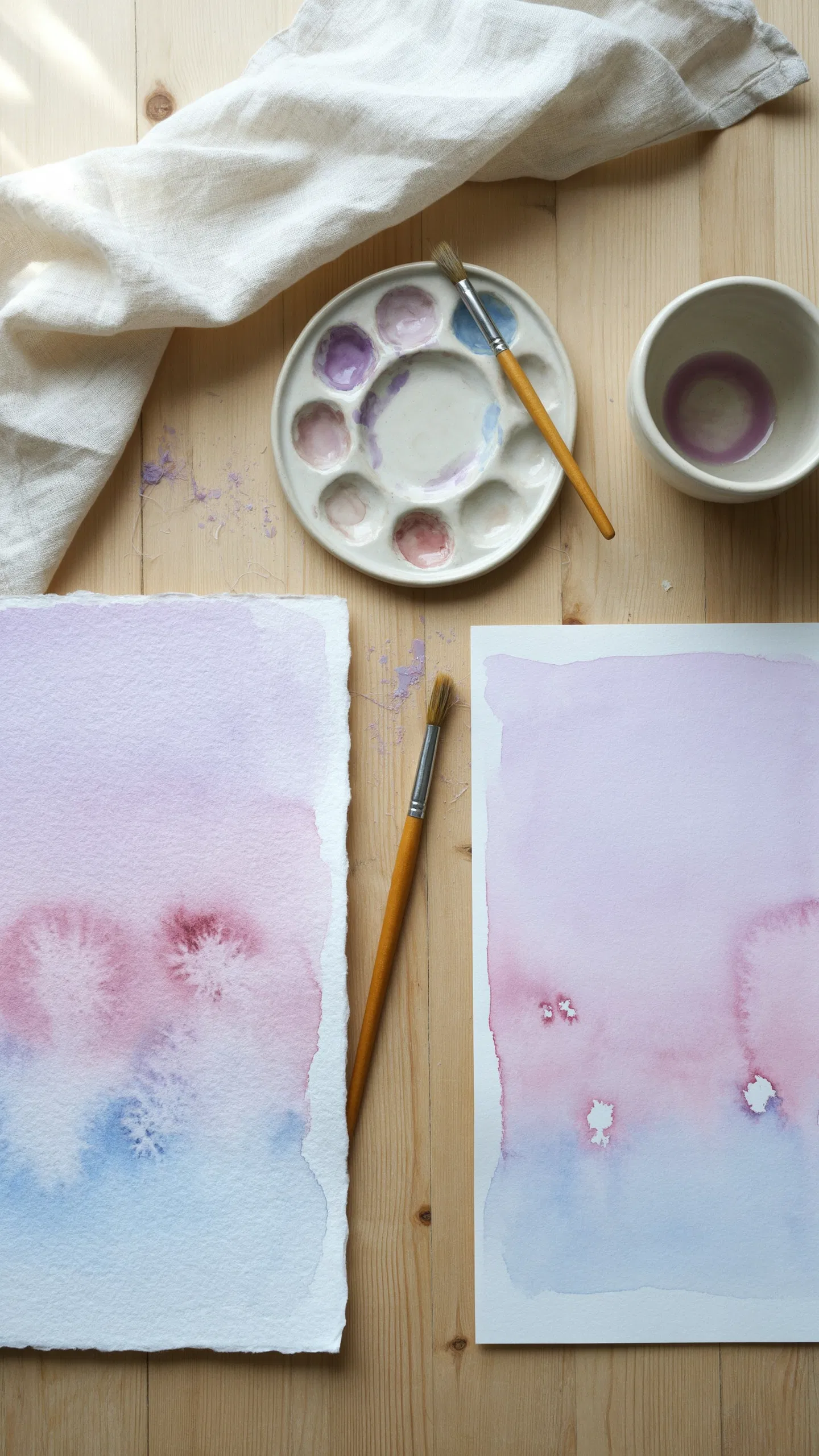
One of the biggest differences between watercolor papers is what they’re actually made from.
Most beginner watercolor paper falls into one of two main categories: cotton paper or cellulose paper, often made from wood pulp.
You can also find papers containing a blend of both fibers.
Understanding the difference can help you decide where it’s worth spending a little more money.
What is cotton watercolor paper?
Cotton watercolor paper is made primarily or entirely from cotton fibers.
High quality 100% cotton paper is valued for its durability, its ability to handle repeated washes, and the control it can offer when working with water and pigment.
Many professional watercolor artists prefer cotton paper because it performs reliably with demanding techniques.
On a well sized cotton paper, you can often work on a wash for longer, create smooth gradients, and build several transparent layers without the surface deteriorating too quickly.
However, not all cotton papers behave identically. Manufacturing techniques and sizing can change how quickly they absorb water and how easily paint can be lifted.
Advantages of cotton watercolor paper:
- Often supports repeated layers and washes very well.
- Can provide more working time for blending.
- Typically offers excellent durability.
- Suits professional paintings and more advanced techniques.
- Is available in archival grades for artwork intended to last.
The main disadvantage is the price. A 100% cotton watercolor block can cost considerably more than a student grade cellulose pad.
What is cellulose watercolor paper?
Cellulose watercolor paper is commonly manufactured using wood pulp fibers.
It is generally more affordable and therefore widely used in student grade watercolor pads and sketchbooks.
Modern cellulose watercolor paper can be perfectly suitable for beautiful paintings, particularly when you use moderate amounts of water or work with simple techniques.
However, some lower priced cellulose papers absorb water unevenly, dry faster, or struggle with repeated brushing and lifting.
That doesn’t mean cellulose paper is automatically bad.
A well manufactured cellulose paper can perform better than a poorly made cotton paper.
Advantages of cellulose watercolor paper:
- Usually less expensive.
- Ideal for regular practice and color studies.
- Widely available in pads and sketchbooks.
- Suitable for many illustrations and simple washes.
- Makes experimenting feel less intimidating.
For beginners, the biggest benefit is that you can practice freely without worrying about wasting expensive sheets.
Cotton vs. cellulose: A comparison
| Feature | 100% Cotton | Cellulose |
|---|---|---|
| Price | Usually higher | Usually lower |
| Wet on wet painting | Often excellent | Varies, sometimes less forgiving |
| Layering | Generally very good | May become difficult with repeated layers |
| Blending time | Often longer | Frequently shorter |
| Lifting paint | Often good, depends on sizing | Highly variable |
| Everyday practice | Excellent but costly | Very practical |
| Detailed illustrations | Excellent with hot press | Good with suitable smooth paper |
| Durability | Often excellent | Depends on quality and construction |
Should beginners buy 100% cotton watercolor paper?
If your budget allows it, I recommend trying at least a few sheets of 100% cotton watercolor paper early in your learning process.
You don’t need to use expensive cotton paper for every exercise. But it’s helpful to experience how a good quality watercolor surface behaves.
You may discover that techniques you previously found frustrating become easier to control.
A practical approach is to keep two kinds of paper in your art supplies: an affordable cellulose pad for daily practice and a small selection of cotton sheets for more finished paintings.
4. What Is Watercolor Paper Sizing?
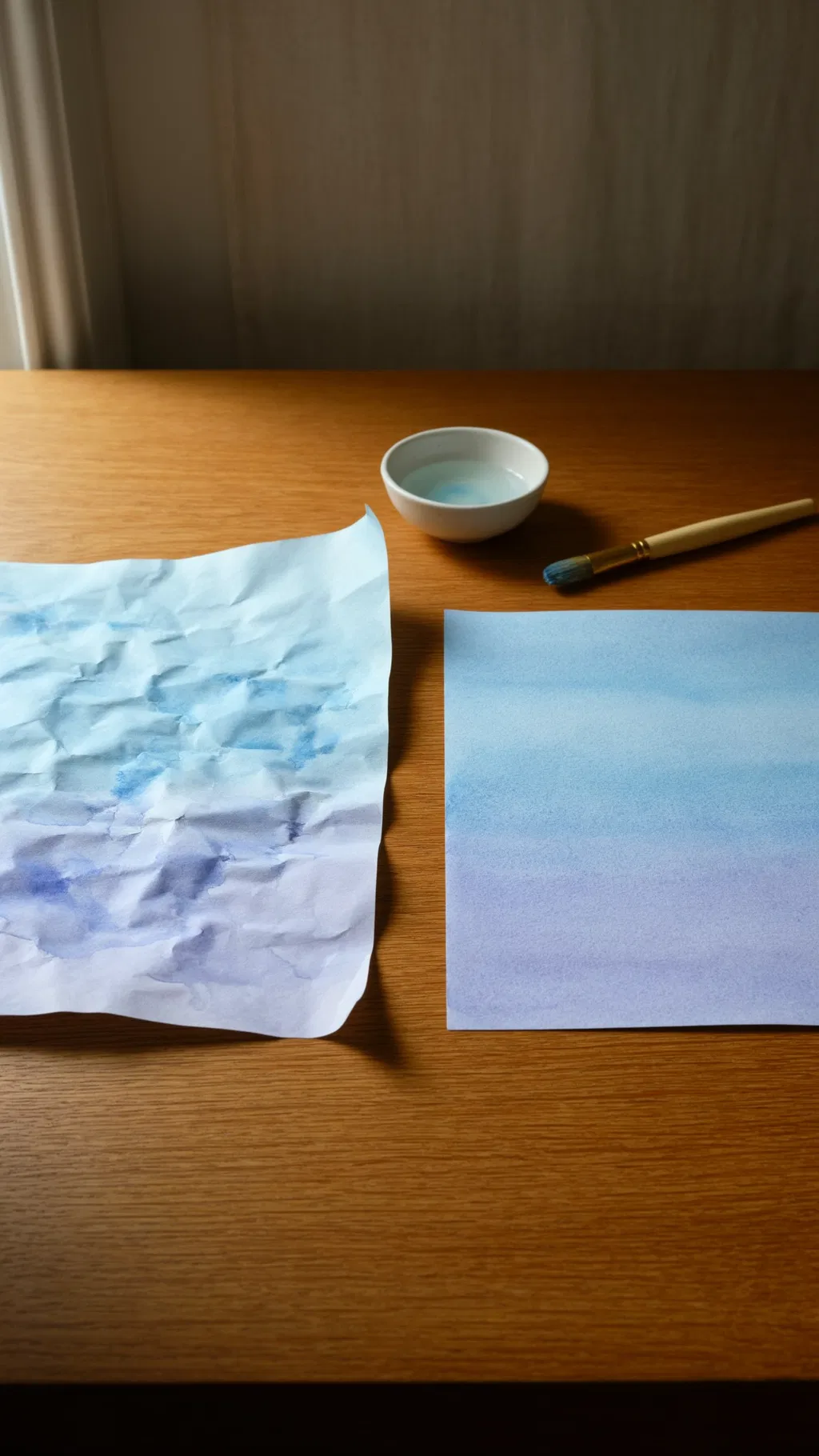
There’s another important characteristic that beginners often overlook: paper sizing.
Despite its name, sizing has nothing to do with the physical dimensions of your paper.
Instead, sizing refers to substances added during manufacturing to control how the paper interacts with water.
Without appropriate sizing, watercolor paper would absorb paint too quickly. Pigment could spread uncontrollably into the fibers, making smooth washes and precise brushwork more difficult.
Sizing helps control this absorption.
Internal sizing vs. surface sizing
Watercolor papers can be sized in different ways.
Internal sizing is introduced during the papermaking process. It helps regulate how the fibers absorb moisture.
Surface sizing is applied to the finished sheet, influencing how water and pigment behave when they first touch the paper.
Some watercolor papers use both methods.
Common sizing materials include gelatin and synthetic alternatives. If you prefer vegan art supplies, look for watercolor papers specifically labeled as vegan or gelatin free.
How sizing affects your painting
Sizing can influence:
- How easily paint spreads across the surface.
- How much time you have to blend colors.
- Whether pigments can be lifted after drying.
- How colors behave when you add another layer.
- Whether paint edges remain sharp or become soft.
A heavily surface sized paper may initially keep water near the surface, while a more absorbent paper can cause washes to settle into the fibers quickly.
Neither behavior is universally better.
For example, if you enjoy painting smooth skies, you may appreciate a paper that allows you enough time to blend your colors. If you create detailed illustrations, you might prefer a surface that supports controlled, precise marks.
Beginner tip: If your watercolor paint behaves strangely on a new paper, don’t immediately assume your technique is wrong. Try a small color wash, a wet on wet test, and a lifting test to understand how the surface responds.
5. Which Watercolor Paper Should You Choose for Different Painting Styles?
Now that you understand the main differences, how do you actually choose the right paper for your artwork?
The easiest method is to consider what you want to paint.
Different techniques place different demands on the paper, so matching your supplies to your painting style can make learning watercolor much more enjoyable.
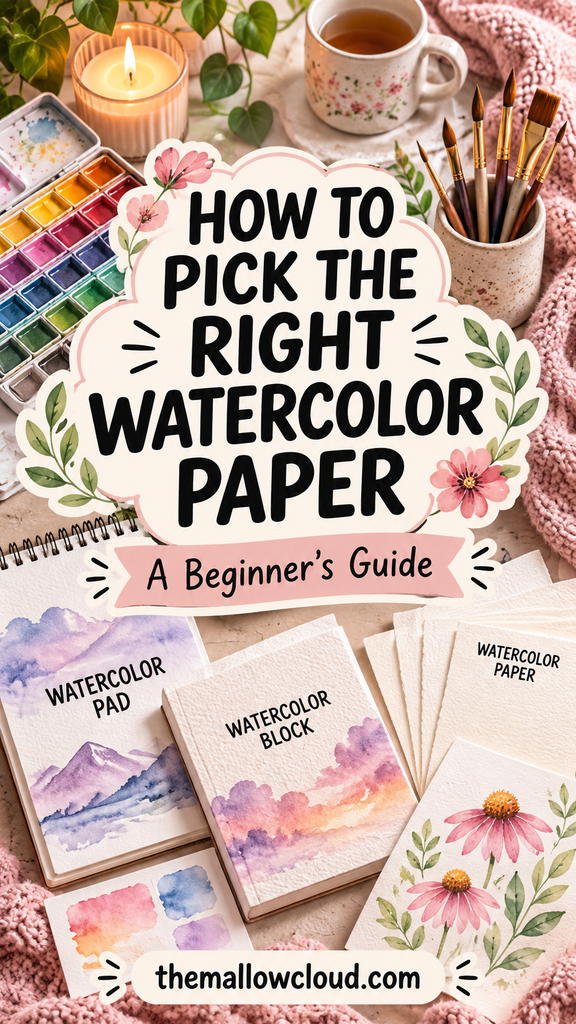
6. Watercolor Paper Pads, Blocks, or Loose Sheets?
Watercolor paper isn’t only available in different weights and textures. You also need to decide how you want to buy and use it.
The three most common formats are pads, blocks, and individual sheets.
Watercolor paper pads
Watercolor pads are convenient and generally affordable.
They often contain anywhere from a dozen to several dozen sheets, although the exact number varies.
Some are spiral bound, while others are glued along one edge.
Pads are ideal for beginners because you can easily remove a sheet, practice a technique, and move on to the next exercise.
However, ordinary watercolor pads don’t necessarily prevent buckling. You may still need to tape the paper to a painting board.
Watercolor paper blocks
Watercolor blocks contain sheets that are glued around multiple edges, often all four, with a small opening for removing each sheet.
This construction helps keep the paper flatter while painting.
Blocks are particularly convenient if you dislike preparing and taping down individual sheets.
Once your painting is completely dry, you can carefully separate the top sheet using an appropriate blunt tool inserted into the manufacturer’s opening.
Remember that even watercolor blocks can experience some buckling, especially with very wet painting techniques.
Loose watercolor sheets
Individual sheets give you more freedom when choosing paper sizes and working formats.
They can also be economical when purchased in larger sizes and cut into smaller pieces.
Loose sheets are particularly useful if you’re planning a larger painting or want to experiment with different brands and textures.
The main disadvantage is that you need to prepare and secure the paper yourself.
For beginners, a good quality watercolor pad or block is usually the most convenient choice.
7. How to Prevent Watercolor Paper From Buckling
One of the most frustrating beginner experiences is watching a perfectly flat sheet of paper turn into a wavy surface.
This happens because cellulose and cotton fibers expand as they absorb water, then contract as they dry. Uneven moisture causes the sheet to distort.
Even high quality watercolor paper can buckle, particularly when you apply large amounts of water.
Fortunately, there are several ways to reduce the problem.
Method 1: Tape your watercolor paper to a board
This is one of the simplest methods for everyday painting.
- Place your watercolor paper on a clean, rigid, water resistant board.
- Secure the edges with artist’s tape or suitable low tack masking tape.
- Make sure the sheet lies flat before painting.
- Allow your painting to dry completely.
- Carefully remove the tape at a low angle, testing first if the paper surface is delicate.
This method helps hold the paper in position, but it won’t eliminate buckling when the sheet becomes heavily saturated.
Method 2: Use a watercolor block
A watercolor block keeps the sheet attached around its edges and can help minimize distortion.
It’s particularly useful for small paintings, everyday exercises, and artists who want to avoid taping down paper.
Method 3: Stretch your watercolor paper
Traditional paper stretching involves soaking or evenly wetting an appropriate sheet, securing it to a suitable board, and allowing it to dry under tension.
Once dry, the paper can be more resistant to buckling during subsequent painting.
However, stretching isn’t necessary for every painting, and not all watercolor papers are suitable for soaking. Always follow the paper manufacturer’s instructions.
Method 4: Choose heavier paper
Switching from 190 gsm to 300 gsm watercolor paper can make a noticeable difference.
For very wet techniques, 425 gsm or 640 gsm sheets may provide even more resistance to distortion.
Still, paper weight alone doesn’t guarantee a completely flat painting.
8. How to Test Watercolor Paper Before Starting a Painting
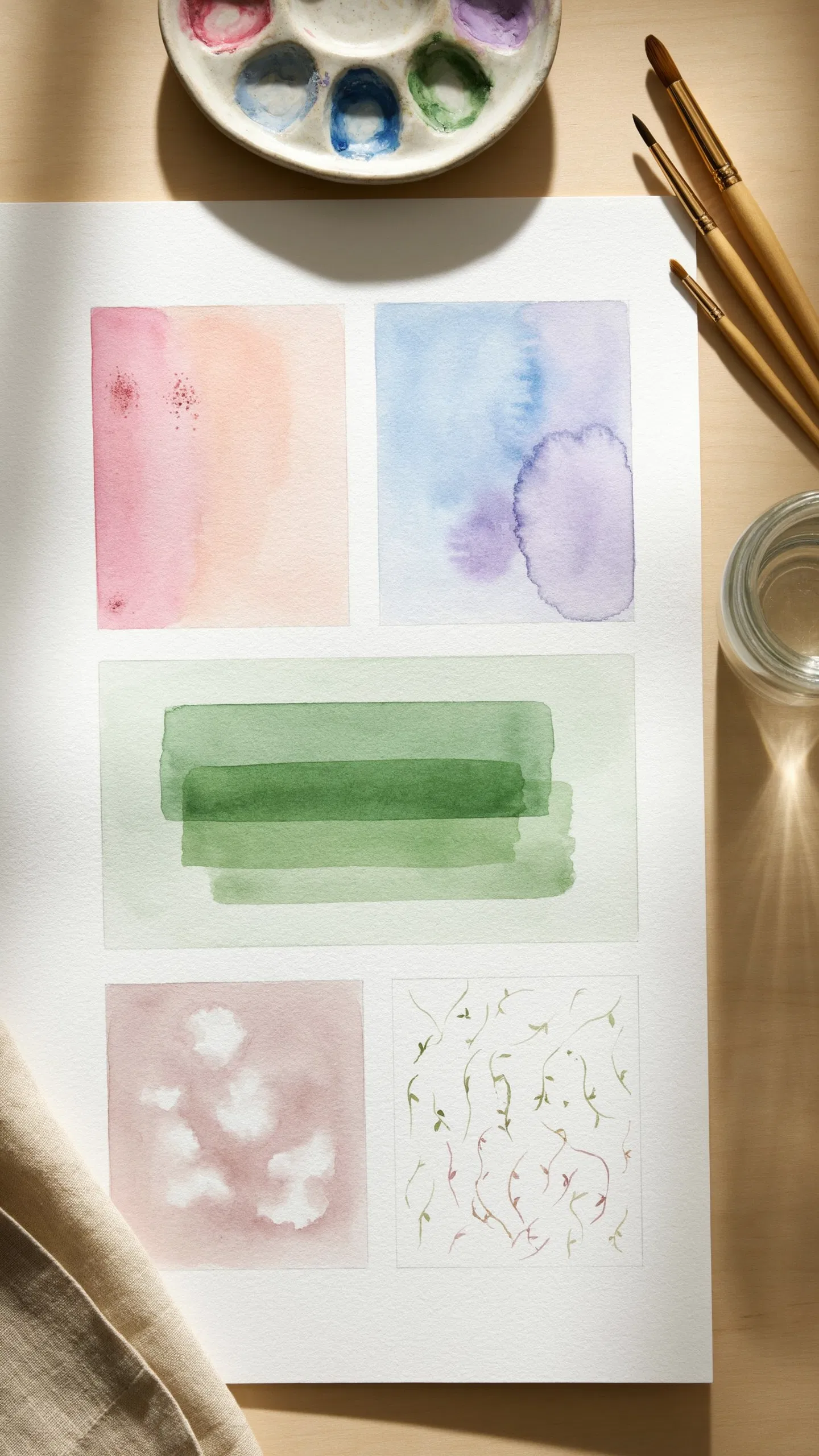
You don’t need professional equipment to find out whether a new watercolor paper suits your painting style.
In fact, a simple watercolor paper test can tell you a surprising amount about how the surface behaves.
Try these five watercolor paper tests
1. The flat wash test
Paint a rectangle using one diluted watercolor. Watch whether the pigment spreads evenly, creates hard edges, or dries with unexpected streaks.
2. The wet on wet test
Wet a small area with clean water, then add two colors. Observe how far the pigments move and how smoothly they blend.
3. The layering test
Paint a light wash and allow it to dry completely. Add another transparent layer, then repeat. Check whether the earlier paint lifts excessively or the paper begins to deteriorate.
4. The lifting test
After a wash has dried, gently rub a small area with a clean damp brush and blot it. Notice how much color can be removed without damaging the surface. Results also depend on whether the pigment is staining.
5. The fine detail test
Paint several thin lines and tiny shapes. This helps you evaluate whether the surface suits your preferred level of detail.
Try these exercises on two different papers using the same watercolor paints, brush, and approximate water quantities.
You’ll quickly begin to notice differences in paint movement, surface texture, drying behavior, and color appearance.
Keep your test sheets and label them with the paper brand, weight, texture, and fiber composition. They can become a useful reference as you develop your watercolor skills.
9. Common Watercolor Paper Mistakes Beginners Make
Choosing paper gets easier with experience, but there are several mistakes worth avoiding from the beginning.
Mistake 1: Using regular drawing or printer paper
Regular paper often lacks the strength and surface treatment required for watercolor techniques.
It may wrinkle, tear, or absorb paint unevenly.
Even inexpensive watercolor paper will usually be a better choice.
Mistake 2: Assuming heavier paper is always better
While heavier paper is generally more resistant to buckling, weight isn’t the only indicator of quality.
A well manufactured 300 gsm cotton paper may be more enjoyable to paint on than a much heavier, poorly made cellulose sheet.
Pay attention to fiber composition, sizing, and texture as well.
Mistake 3: Buying expensive cotton paper for every exercise
Professional cotton paper can be wonderful, but you don’t need it for every brushstroke practice session.
Using affordable paper for simple exercises allows you to experiment more freely.
Save a few premium sheets for paintings where the difference in performance really matters.
Mistake 4: Choosing rough paper for tiny illustrations
Rough watercolor paper creates lovely effects, but its uneven surface can make delicate details frustrating.
If you enjoy precise botanical paintings, small lettering, or ink outlines, hot pressed paper may be more suitable.
Mistake 5: Ignoring paper sizing
Two sheets of 300 gsm cold pressed watercolor paper can behave very differently.
If one absorbs pigment immediately while another allows you to move color around, sizing may be one of the reasons.
Don’t judge watercolor paper by weight and texture alone.
Mistake 6: Painting on the wrong side without testing
Some watercolor papers have noticeably different textures on their two sides.
One side may have a more pronounced grain, while the reverse is slightly smoother.
On many papers, both sides can be used successfully. However, the manufacturer may recommend a preferred painting side, especially when surface treatments differ.
Testing both sides can help you discover which one you prefer.
Mistake 7: Giving up on watercolor because the paper behaves badly
Watercolor already takes practice because water moves naturally and sometimes unpredictably.
Poorly suited paper can make that learning process unnecessarily frustrating.
If you consistently struggle with uneven washes, harsh edges, or damaged paper fibers, try a better quality surface before deciding that watercolor painting simply isn’t for you.
10. How to Choose Watercolor Paper on a Budget
You don’t need a large collection of professional art supplies to get started.
Instead of buying several expensive watercolor blocks immediately, focus on finding a paper that supports your current learning goals.
Here are three practical ways to build your paper collection.
The Budget Beginner Setup
Affordable
For exploring watercolor techniques without spending too much.
- One 300 gsm cold pressed cellulose paper pad
- A small number of loose cotton sheets for comparison
- A rigid painting board and suitable tape
Great for brushstroke practice, color mixing, simple flowers, and small illustrations.
The Versatile Everyday Setup
For beginners who already know they enjoy watercolor painting.
- One 300 gsm cold pressed 100% cotton watercolor block
- One affordable cellulose sketch pad
- A few hot pressed sheets for detailed work
A balanced combination for loose florals, landscapes, illustrations, and everyday practice.
The Experimental Artist Setup
For exploring different textures and discovering your personal style.
- 300 gsm hot pressed cotton paper
- 300 gsm cold pressed cotton paper
- 300 gsm rough cotton paper
- One affordable practice pad
Ideal for comparing how the same watercolor paints behave on different surfaces.
If you’re purchasing watercolor paper for the first time, I wouldn’t spend too much money on numerous sizes and textures.
Choose a reliable 300 gsm cold pressed pad, make several paintings, and expand your collection once you know what you’d like to try next.
What about acid free and archival watercolor paper?
If you want your paintings to last for many years, look beyond the paper’s weight and texture.
Choose a reputable paper that is acid free and intended for long term artistic use. Archival quality papers are designed to resist deterioration, although the exact longevity depends on the materials and storage conditions.
Be aware that acid free and archival are not identical claims. Acid free paper may still contain materials that affect its long term durability.
For finished paintings that you plan to frame, sell, or give as meaningful gifts, look for documented archival properties and consider using artist grade, lightfast watercolor paints.
Protecting finished artwork from excessive sunlight, humidity, and poor framing materials is also important.
Frequently Asked Questions About Watercolor Paper
What is the best watercolor paper for beginners?
For most beginners, 300 gsm cold pressed watercolor paper is the best all around choice.
It offers a versatile surface for learning basic techniques while providing reasonable resistance to buckling.
A good quality cellulose pad is suitable for everyday practice, while 100% cotton paper is especially worthwhile if your budget allows.
Is 200 gsm paper good for watercolor?
Yes. Paper around 200 gsm can be suitable for quick sketches, light washes, and watercolor journaling.
However, it may buckle considerably when exposed to large amounts of water.
For more demanding techniques, 300 gsm is usually a better starting point.
Is cotton watercolor paper worth the extra money?
For many watercolor artists, yes.
High quality cotton paper often performs particularly well with wet on wet painting, soft blending, and repeated layers.
However, beginners don’t need to use cotton paper exclusively. A combination of affordable practice paper and a few premium cotton sheets can be a very sensible approach.
What’s the difference between hot pressed and cold pressed watercolor paper?
Hot pressed paper has a smoother surface, making it suitable for detailed illustrations and fine lines.
Cold pressed paper has a lightly textured surface that’s versatile for washes, flowers, landscapes, and general painting.
Neither is inherently better. The right choice depends on the artwork you want to create.
Can you use both sides of watercolor paper?
Often, yes.
Many watercolor papers can be painted on both sides, although the surface texture or sizing may differ.
Check the manufacturer’s recommendations and test both sides to determine which gives you the results you prefer.
Do you need to stretch 300 gsm watercolor paper?
Not necessarily.
For everyday painting with moderate amounts of water, 300 gsm paper can often be used without stretching, particularly when taped to a board or purchased as a watercolor block.
If you regularly use extremely wet techniques or large sheets, stretching may help reduce buckling.
Does watercolor paper expire?
Unopened watercolor paper doesn’t have a simple fixed expiration date.
However, improper storage, humidity, contamination, and changes to the surface sizing can affect its performance over time.
Store your paper flat in a clean, dry environment, away from direct sunlight and excessive moisture.
Why does my watercolor paper tear when I lift paint?
The surface may be too delicate for repeated scrubbing, or it may have already been weakened by moisture and friction.
Try lifting paint gently with a clean damp brush and blotting with a soft cloth.
Better quality watercolor paper can often withstand more manipulation, but even premium surfaces can be damaged by aggressive brushing.
Final Thoughts: Finding the Right Watercolor Paper for Your Art
Choosing watercolor paper can feel overwhelming when you’re just starting out. Between paper weights, textures, cotton fibers, cellulose, and sizing, there are a surprising number of details to consider.
But you don’t need to understand every technical specification before you start painting.
For most beginners, a good quality 300 gsm cold pressed watercolor paper is an excellent first choice. It gives you enough flexibility to explore different techniques, discover your favorite subjects, and develop confidence with watercolors.
As your skills grow, experiment with hot pressed paper for detailed illustrations, rough paper for expressive landscapes, and 100% cotton paper for more demanding washes and layering.
Remember that watercolor paper isn’t simply a background for your art. It’s an active part of the painting process.
The more you understand how different papers behave, the easier it becomes to work with water and pigment instead of struggling against them.
And sometimes, changing the paper is exactly what makes a previously frustrating watercolor technique finally click.