Watercolor Guide for Beginners
(Why Your Paintings Look “Wrong” – And How to Fix Them Easily)
You sit down with your watercolor set, dip your brush into the paint… and somehow, it just doesn’t look like you imagined.
The colors feel too harsh or too pale. The paper buckles. The paint spreads in weird ways you didn’t expect. And instead of those soft, dreamy watercolor effects you see everywhere, your page looks messy and out of control.
After a few tries, you start thinking maybe watercolor just isn’t for you.
That’s exactly where most people start.
Not with beautiful washes or perfect blends. Just with water, paint, and a lot of confusion.
The good news is, watercolor isn’t about controlling everything perfectly. It’s about understanding how water and pigment work together. Once you get that, everything starts to feel easier.
You don’t need to be “good at painting.” You just need to know what actually matters.
In this guide, I’ll show you how to go from “why does this look so bad?” to creating soft, aesthetic watercolor pieces you actually enjoy. Step by step, without overwhelm, and in a way that finally makes sense.
What Is Watercolor (Really)?
Watercolor is a painting technique where pigment is mixed with water and applied in transparent layers.
That sounds simple, but the key is this:
Watercolor is not about precision. It’s about flow.
Unlike acrylic or oil, you don’t fully control the paint. The water moves, spreads, and blends in ways that are partly unpredictable. That’s not a mistake. That’s the whole point.
Instead of forcing the paint, you learn to guide it.
Most watercolor paintings are built from:
light layers
soft transitions
simple shapes
controlled water
Once you understand how water behaves, everything starts to click.
Why Watercolor Feels Hard (At First)
Watercolor has a reputation for being difficult, and honestly, that’s not completely wrong.
But it’s not hard because it’s complex.
It’s hard because beginners usually focus on the wrong things.
Here’s why it feels tricky in the beginning:
1. You can’t “fix” mistakes easily
With watercolor, you can’t just paint over everything like with acrylics. That makes beginners nervous, and they try to control every brushstroke.
2. Too much or too little water
Most problems come from water control. Too much water makes everything bleed. Too little makes it look dry and patchy.
3. Expecting perfect results
Watercolor is naturally soft and slightly unpredictable. Trying to make it look “perfect” often ruins the effect.
4. Using the wrong paper
Regular paper doesn’t handle water well. It wrinkles and absorbs paint unevenly, which makes everything look worse than it actually is.
What You Need to Start Watercolor
You don’t need expensive supplies.
Start simple:
watercolor paper (important)
basic watercolor set
1–2 round brushes
a jar of water
paper towel
That’s enough.
If you want to upgrade later:
better brushes
higher quality paints
mixing palette
But in the beginning, your results depend more on technique than tools.
Step-by-Step: How to Start Watercolor
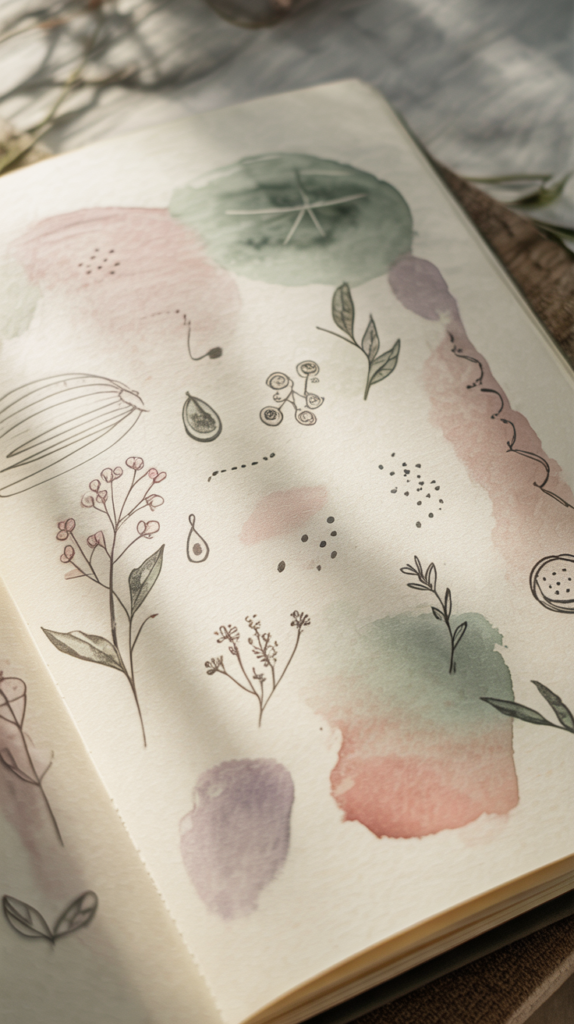
Let’s break it down in a simple way.
Step 1: Learn water control
Before painting anything, try this:
Paint a simple square.
Use a lot of water.
Then try the same square with less water.
Watch how the paint behaves.
This is the most important skill.
Step 2: Start with light layers
Watercolor works best in layers.
Start very light.
Let it dry.
Add another layer.
Trying to get the final color immediately often leads to muddy results.
Step 3: Keep shapes simple
Don’t start with complex subjects.
Instead of painting:
a detailed flower
Paint:
simple circles and loose petals
Watercolor looks better when it’s not overworked.
Step 4: Let the paint move
Instead of controlling everything, try this:
Add water to the paper
Drop in color
Watch it spread
This creates those soft, aesthetic effects.
Step 5: Stop earlier than you think
One of the biggest beginner mistakes is overworking.
If it looks “almost done”
→ stop
Too many layers can make everything look dull.
15 Easy Watercolor Ideas to Try
If you don’t know what to paint, start here:
simple flowers
leaves and branches
color gradients
abstract blobs
sunsets
clouds
waves
circles with blends
minimal landscapes
hearts
stars
soft backgrounds
color swatches
tiny fruits
simple patterns
Tip: Paint each idea multiple times.
Common Beginner Mistakes (And How to Fix Them)
1. Using too much water
Your paint spreads uncontrollably and loses shape.
→ Use less water and build up slowly.
2. Going too dark too fast
Colors look heavy and muddy.
→ Always start lighter than you think.
3. Overworking the painting
You keep adding layers until it looks dull.
→ Stop earlier. Let it stay soft.
4. Not letting layers dry
Colors mix in unwanted ways.
→ Wait between layers.
5. Using the wrong paper
The paint looks uneven and patchy.
→ Use proper watercolor paper.
6. Trying to control everything
You fight against the natural flow.
→ Let the water do part of the work.
7. Adding too many details
The painting loses its softness.
→ Keep it minimal.
8. Comparing to perfect artworks
Online paintings look flawless.
→ Those artists practiced a lot.
9. Giving up too early
Watercolor feels frustrating at first.
→ It gets easier quickly with practice.
10. Using too many colors
Everything looks chaotic.
→ Stick to 2–3 colors at first.
How to Make Your Watercolor Look Aesthetic
Want that soft Pinterest look?
Here’s how:
Use light colors
Layer gently
Leave white space
Stick to a simple palette
Use soft edges
Avoid overworking
Less really is more with watercolor.
Daily Watercolor Routine (5 Minutes)
If you want to improve fast:
1 minute: practice water control
2 minutes: paint simple shapes
2 minutes: create a small composition
That’s it.
Consistency beats long sessions.
FAQ About Watercolor
Can I learn watercolor even if I can’t draw at all?
Yes, absolutely. You don’t need any drawing skills to start. Watercolor works very differently from traditional drawing. It’s not about perfect lines or proportions. It’s about understanding how water and color interact. Even if your first attempts feel a bit off, that’s completely normal. You’ll improve quickly as you get used to it.
Why do my colors look dull or muddy?
This usually happens when you mix too many colors or go over the same area too often. The more you layer and mix, the more the colors lose their freshness. Try using fewer colors and work in light, clean layers. Simplicity makes a big difference here.
What is the most common beginner mistake?
Using too much water while trying to control everything at the same time. Many beginners try to force the result instead of letting the paint flow naturally. Watercolor works best when you guide it, not fight it.
Do I need expensive materials to get good results?
No. The most important thing is good paper. It makes a huge difference in how your paint behaves. Your paints and brushes can be very basic in the beginning. Technique matters much more than expensive tools.
Why does my paint spread uncontrollably?
In most cases, there’s simply too much water on the paper or brush. Try using a bit less water and observe how the paint behaves. With a little practice, you’ll develop a natural feeling for the right balance.
How can I prevent my paper from warping?
Regular paper isn’t made for watercolor and absorbs too much water unevenly. That’s why it starts to buckle. Using proper watercolor paper, especially thicker paper, helps keep your surface stable and your results much cleaner.
How often should I practice watercolor?
Short, consistent practice is the key. Even five minutes a day can make a noticeable difference. It’s not about long sessions, it’s about building a habit and getting comfortable with the process.
How do I get that soft, aesthetic watercolor look?
Focus on light layers, soft colors, and leaving some white space. Avoid overworking your painting. Stick to a simple color palette and let the edges stay slightly soft instead of trying to define everything.
What should I do if I lose motivation?
Keep it small and simple. Instead of planning a full painting, just try a few color blends or basic shapes. Removing the pressure often brings the motivation back naturally.
How long does it take to improve?
Most people see progress surprisingly fast. After just a few sessions, you’ll start to understand how water and pigment behave. The more you practice, the more natural it feels.
Start Painting Today (Yes, Even If It Feels Messy)
You don’t need perfect technique. You don’t need expensive tools. And you definitely don’t need to know exactly what you’re doing.
All you need is water, paint, and the willingness to try.
Your first paintings might feel unpredictable. Maybe too soft, maybe too messy. But that’s part of the process. That’s how watercolor works.
The more you let go of control, the better your paintings will start to look.
So instead of waiting until you feel ready, just start.
Paint a few simple shapes. Let the colors flow. Watch what happens.
Because watercolor isn’t about perfection.
It’s about learning to enjoy the moment when color meets water and something unexpected appears on your page.