How to Start Doodling: A Simple Beginner Guide (Even If You Can’t Draw)
You sit down with a pen, open a fresh page… and suddenly your mind goes blank.
You want to doodle, but nothing feels right. Every line looks a bit off, every idea feels too complicated, and after a few seconds, you’re already thinking maybe this just isn’t your thing.
That’s exactly where most people start.
Not with talent. Not with perfect sketches. Just with a blank page and a little hesitation.
The good news is, doodling doesn’t expect you to be good at drawing. It’s actually the opposite. The more imperfect your lines are, the more natural and relaxed your doodles will look. You don’t need techniques, you don’t need experience, and you definitely don’t need to know what you’re doing.
All you need is the willingness to start small.
In this guide, I’ll show you how to go from “I have no idea what to draw” to filling your pages with simple, aesthetic doodles you actually enjoy creating. Step by step, without pressure, and in a way that feels easy from the very beginning.
What Is Doodling (Really)?
Doodling is simple, spontaneous drawing that doesn’t follow strict rules or expectations. It’s not about creating perfect artwork or impressing anyone, but rather about giving your mind a break while your hand moves freely across the page.
Instead of focusing on results, doodling is more about the process itself. It helps you relax, keeps your hands gently occupied, and allows you to express small ideas in a visual way without overthinking them.
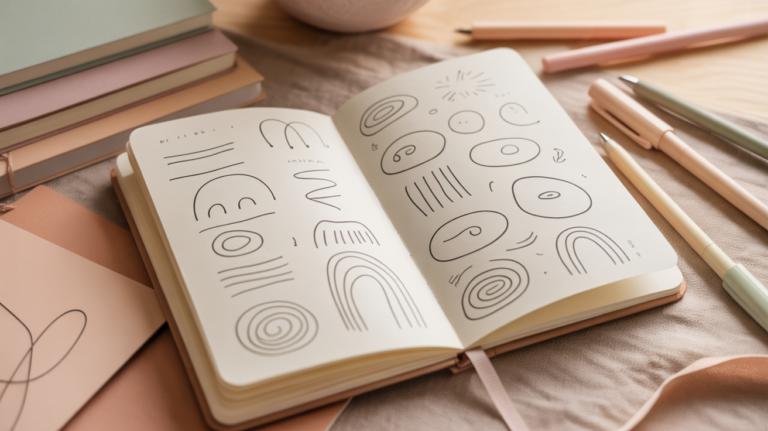
What makes it so approachable is how simple it really is. Most doodles are built from just a few basic elements like circles, lines, dots, and other easy shapes. You combine them, repeat them, and suddenly they turn into something that feels creative and uniquely yours.
And that’s really all there is to it.
Why Doodling Is Perfect for Beginners
If you’ve ever felt intimidated by drawing, doodling is the easiest and most relaxed way to get started. It takes away all the pressure and replaces it with something playful and simple. You don’t need to “be good” at anything. You just need to begin.
Here’s why doodling works so well, especially for beginners:
1. No pressure to be perfect
Your doodles don’t need to look realistic or polished. In fact, slightly uneven lines and imperfect shapes often make them look more natural and charming. There’s no right or wrong here, which makes it much easier to stay relaxed and just keep going without overthinking every detail.
2. You can start with zero skills
You don’t need any prior knowledge to begin doodling. No techniques, no shading, no understanding of proportions or anatomy. Everything is based on simple shapes and repetition, which means you can jump in immediately and still create something that looks good.
3. It’s fast and fun
Doodling doesn’t require long sessions or a big time commitment. You can fill a page with small drawings in just a few minutes, and each little doodle gives you a quick sense of progress. That makes it easy to stay motivated and actually enjoy the process instead of feeling stuck.
4. It helps you relax
Many people use doodling as a way to unwind after a busy day. The repetitive motions and simple shapes can feel almost calming, like a quiet moment just for yourself. It gives your mind space to slow down while your hands stay gently active.
What You Need to Start Doodling
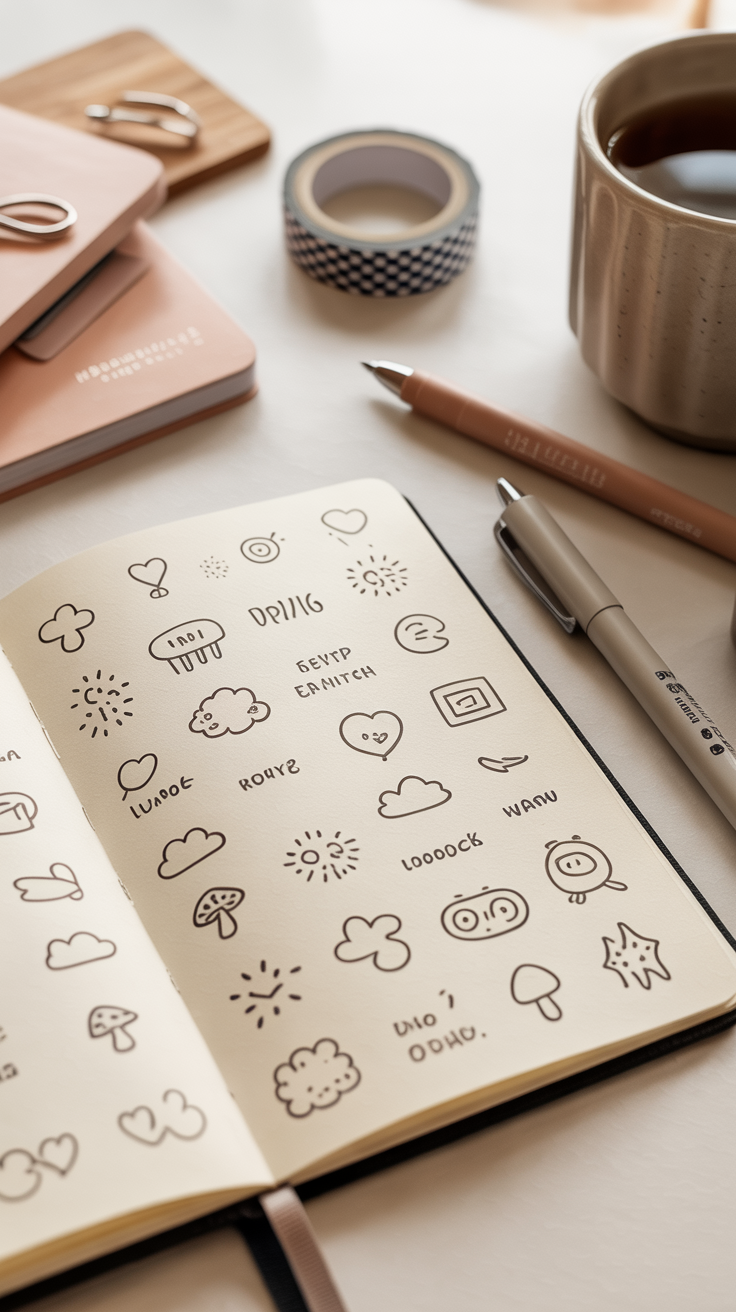
You don’t need fancy tools.
Start with this:
- a simple notebook or sketchbook
- a black pen or fineliner
- optional: colored pens or highlighters
That’s enough.
If you want to upgrade later, you can try:
- brush pens
- dotted journals
- pastel markers
But honestly, a basic pen is all you need.
Step-by-Step: How to Start Doodling
Let’s break it down into a super simple system.
Step 1: Start with basic shapes
Draw these over and over:
- circles
- squares
- triangles
- lines
Don’t think. Just repeat.
Step 2: Turn shapes into objects
Now transform them:
- circle → sun, flower, face
- square → gift box, window
- triangle → tree, mountain
This is where doodling starts to feel fun.
Step 3: Keep everything simple
Avoid details.
Instead of drawing:
- a realistic flower
Draw:
- a circle + 5 petals
Simple always looks better in doodles.
Step 4: Repeat and vary
Draw the same thing multiple times:
- small
- big
- tilted
- in a row
This creates that aesthetic “Pinterest look.”
Step 5: Fill your page
Don’t leave big empty spaces.
Fill your page with:
- small icons
- mini patterns
- repeated shapes
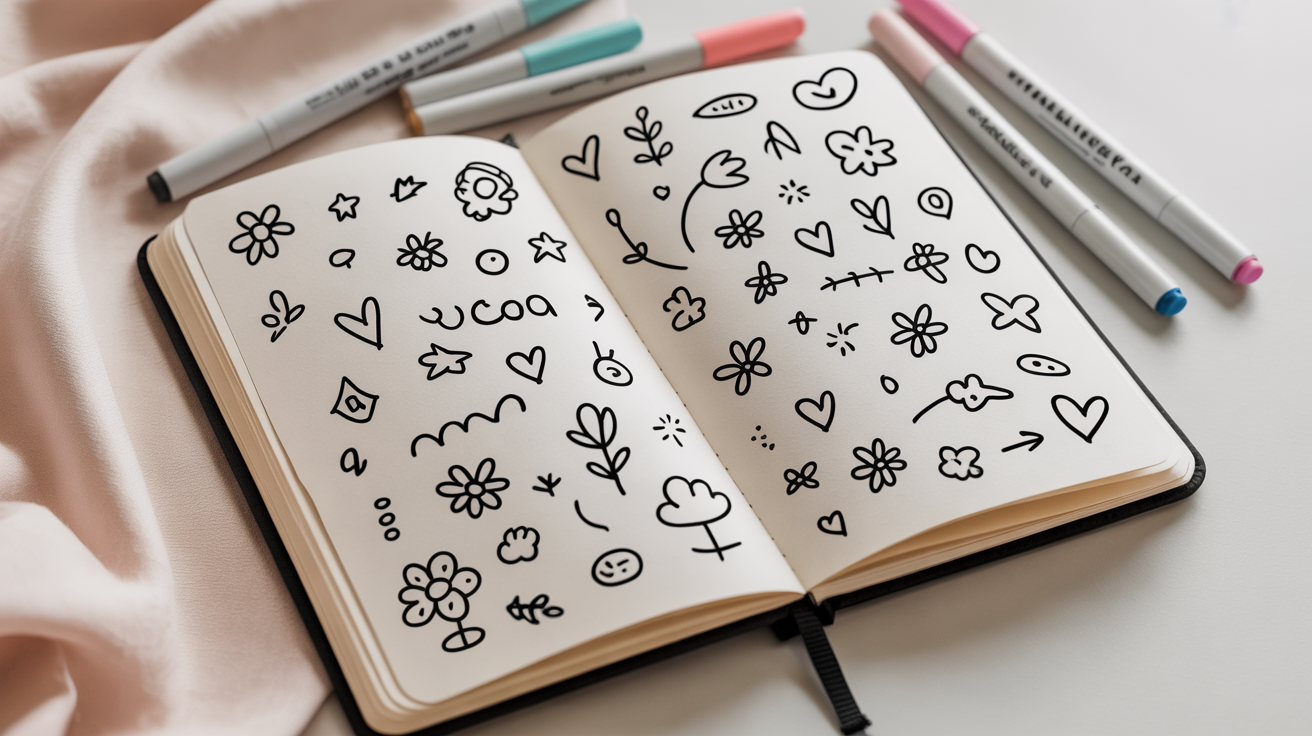
Messy pages often look the best.
20 Easy Doodle Ideas to Try Right Now
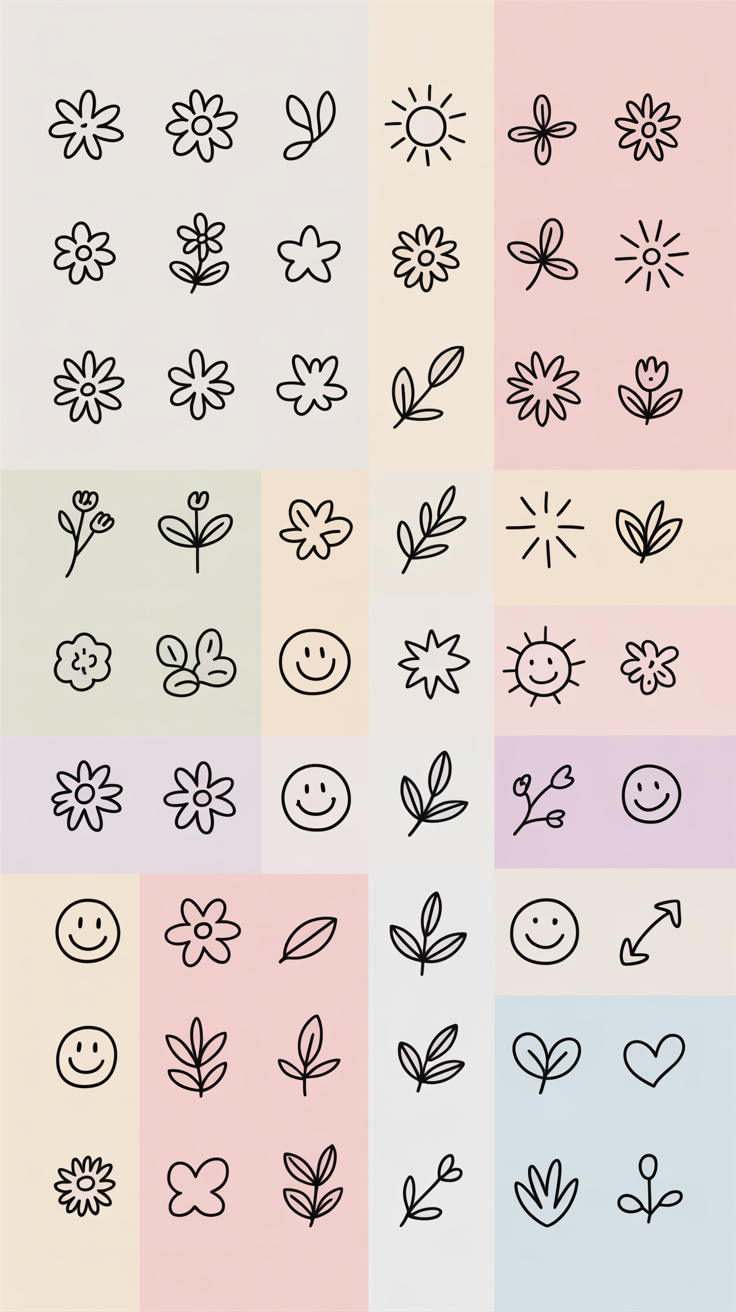
If you don’t know what to draw, start here:
- flowers
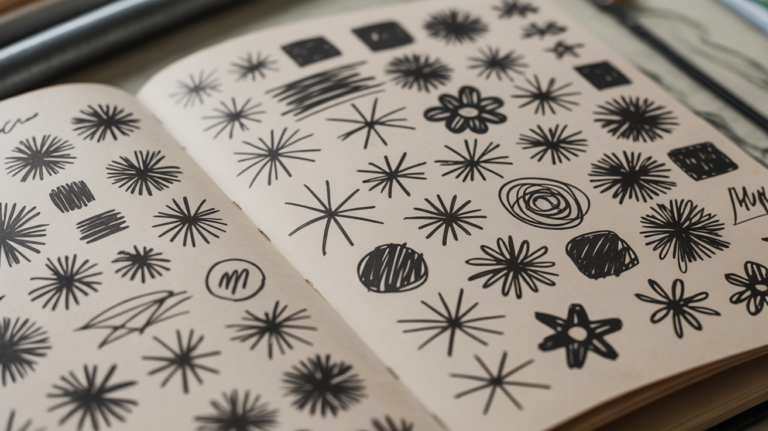
- stars
- hearts
- clouds
- suns
- leaves
- rain drops
- smiley faces
- tiny houses
- mushrooms
- coffee cups
- books
- arrows
- speech bubbles
- candles
- planets
- waves
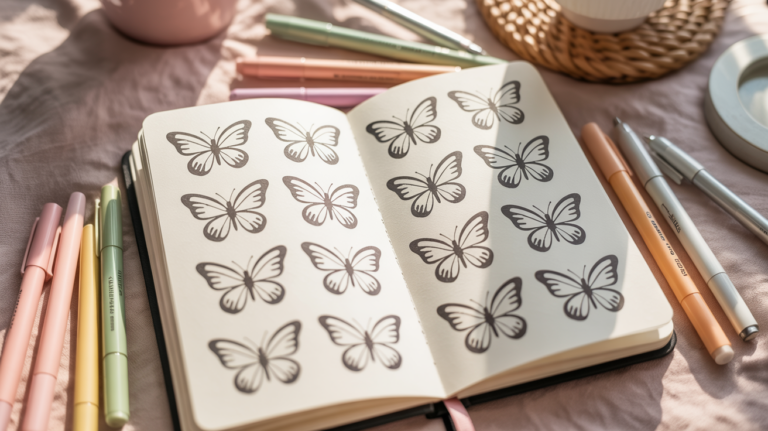
- butterflies
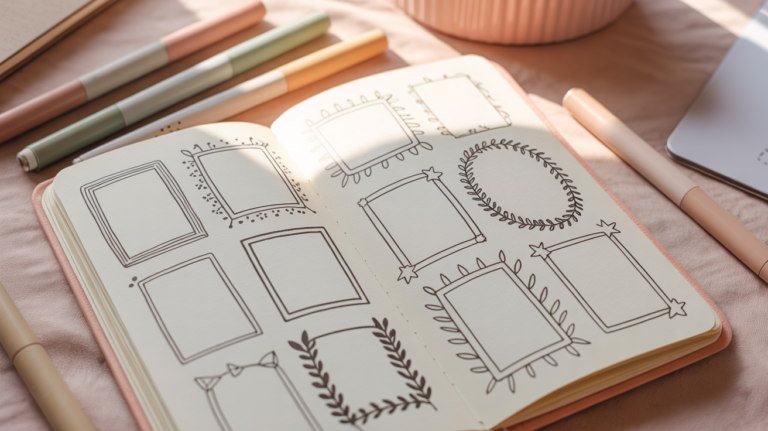
- frames
- sparkles
Tip: Draw each idea 5–10 times.
Common Beginner Mistakes (and How to Avoid Them)
1. Trying to be perfect
Your lines don’t need to be clean.
→ Slightly messy lines actually look better.
2. Making drawings too complex
Beginners often add too many details.
→ Keep everything minimal.
3. Comparing yourself to others
Pinterest is full of polished doodles.
→ Remember: those artists practiced a lot.
4. Giving up too early
Doodling feels awkward at first.
→ It gets easier after just a few pages.
How to Make Your Doodles Look Aesthetic
Want that clean, aesthetic look?
Here’s how:
Use repetition
Repeat the same doodle multiple times.
Stick to simple colors
Black + one accent color works great.
Keep spacing consistent
Even spacing makes your page look calm.
Add tiny details
Dots, lines, sparkles make a big difference.
Daily Doodling Routine (5 Minutes)
If you want fast progress, try this:
- 1 minute: draw shapes
- 2 minutes: turn shapes into objects
- 2 minutes: fill a small area
That’s it.
Consistency matters more than time.
FAQ About Doodling
Can I really learn doodling if I can’t draw at all?
Yes, absolutely. Doodling is one of the easiest ways to get into drawing because it doesn’t rely on traditional skills like perspective or anatomy. You’re working with very simple shapes and repeating patterns, which means anyone can learn it. Even if your lines feel shaky at first, that’s completely normal. With a bit of practice, your confidence will grow naturally.
What should I draw if I have no ideas?
Start with the basics. Go back to simple shapes like circles, lines, and dots, and turn them into small objects like flowers, suns, or faces. You can also repeat the same doodle multiple times to fill a page. Another easy trick is to look around you and simplify everyday objects into basic shapes. A mug, a leaf, or even a lamp can become a simple doodle.
How often should I practice doodling?
Consistency is more important than time. Even five minutes a day can make a big difference. Short, regular sessions help you build confidence faster than long sessions once in a while. Try to make it part of your daily routine, like doodling while drinking coffee or during a quiet moment in the evening.
Is it better to use pen or pencil?
For beginners, using a pen is often the better choice. It helps you let go of perfection because you can’t erase your lines. This encourages you to keep going instead of correcting every small mistake. If you feel more comfortable with a pencil at first, that’s fine too, but switching to pen can really help you improve your flow.
Why do my doodles look messy compared to others?
What you see online is often the result of a lot of practice. Clean and aesthetic doodles come with time. In the beginning, your lines might feel uneven or unbalanced, and that’s completely normal. The key is to keep going. Over time, your hand control improves, and your doodles will start to look more consistent.
How can I make my doodles look more aesthetic?
Focus on repetition, spacing, and simplicity. Repeat the same shapes multiple times, keep your drawings evenly spaced, and avoid adding too many details. Sticking to one or two colors also helps create a clean look. Small elements like dots or tiny lines can add a lot without making things complicated.
Do I need special materials to start?
Not at all. A simple pen and a notebook are more than enough. You don’t need expensive tools to create beautiful doodles. Once you feel more comfortable, you can experiment with different pens or colors, but starting simple is always the best approach.
How long does it take to get better at doodling?
Most people notice progress after just a few days of consistent practice. Because doodling is based on repetition, your improvement can feel quite fast. The more you draw, the more natural it becomes, and the easier it is to come up with ideas.
Can doodling really help with stress?
Yes, many people find doodling very calming. The repetitive movements and simple shapes can help your mind slow down, similar to other relaxing activities. It gives you a small break from thinking and lets you focus on something light and creative.
What if I lose motivation after a few tries?
That happens to almost everyone at some point. Try to lower your expectations and keep things simple. Instead of aiming for a full page, just draw a few small shapes or icons. Sometimes it helps to follow a list of easy doodle ideas so you don’t have to think too much. The key is to keep it light and enjoyable, not like a task you have to complete.
Start Doodling Today (Yes, Really)
You don’t need talent, and you don’t need to wait for the “right moment” to begin. A simple pen and a blank page are more than enough to get started, and honestly, that’s where the magic happens anyway. The first few lines might feel a bit awkward, maybe even a little messy, but that’s completely normal. That’s exactly how every doodle journey begins.
The more you allow yourself to just draw without overthinking, the easier it becomes. Your hand gets more confident, your ideas start to flow, and suddenly you notice how your pages slowly fill up with little shapes, patterns, and tiny illustrations that feel like yours. Not perfect, not polished, but real and full of character.
So instead of waiting until you feel ready, just start. Grab a pen, draw a few circles, turn them into something playful, and keep going. Give yourself five quiet minutes and see where it takes you. You might be surprised how quickly that blank page turns into something you actually enjoy looking at.
Because in the end, doodling isn’t about creating something impressive. It’s about starting small, staying curious, and letting yourself enjoy the process one simple line at a time.