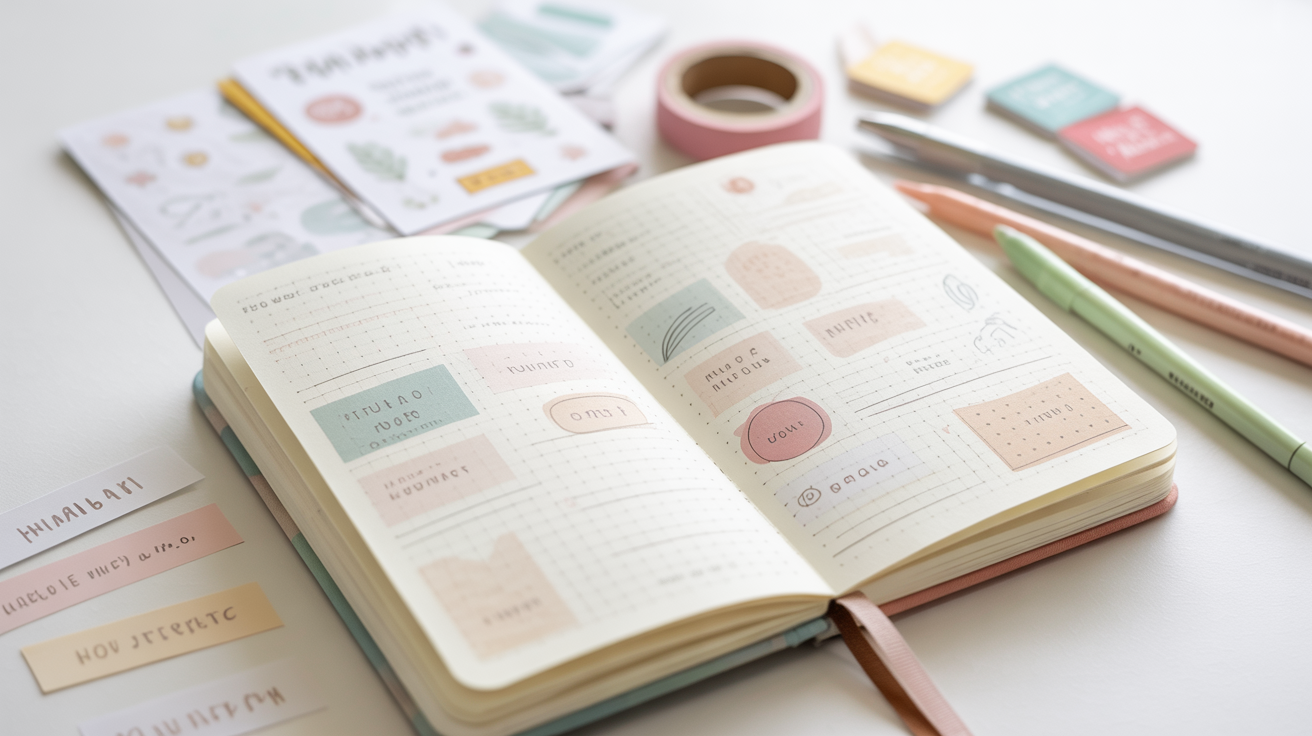
How to Start a Journal (Beginner-Friendly Guide)
Maybe you’ve been thinking about starting a journal for a while. You like the idea of having a space just for yourself, somewhere to write things down, clear your mind, or simply slow down for a few minutes.
But when you actually sit in front of a blank page, it suddenly feels harder than expected. You’re not sure what to write, how to start, or whether you’re doing it “right”.
That’s exactly where most people get stuck.
The good news is that journaling doesn’t need a system, a perfect routine, or beautifully designed pages. It can be simple, a little messy, and completely personal from the very beginning.
In this guide, you’ll learn how to start a journal in an easy and relaxed way, with simple ideas that help you begin without overthinking it.
What Is Journaling (and Why People Love It)
Journaling is simply writing things down. Thoughts, ideas, feelings, lists, dreams, anything.
There are no strict rules.
People journal because it helps them:
- clear their mind
- reduce stress
- organize thoughts
- feel more creative
- slow down for a moment
It’s like giving your brain a place to breathe.
Step 1: Choose a Journal You Actually Want to Use
You don’t need a fancy notebook. But it helps if you like it.
Look for something that feels:
- simple and inviting
- not “too precious” to write in
- easy to open anytime
Good options:
- a plain notebook
- a dotted journal
- even loose pages in a folder
Tip: If it feels too perfect, you might be afraid to “ruin” it. Go simple.
Step 2: Let Go of Perfect Pages
For many beginners, this is exactly the point where everything feels difficult.
It’s easy to think your journal should look like the perfectly styled pages you see on Pinterest, with neat handwriting, pretty layouts, and a clear structure from the start. But that expectation often creates pressure instead of helping you begin.
In reality, your first pages will probably feel a bit messy, maybe shorter than you expected, sometimes random or even inconsistent. That’s completely normal and part of the process.
Your journal isn’t something you have to present or make look good for others. It’s simply a space that belongs to you, where everything can be imperfect, unfinished, and real.
Step 3: Start With Easy Prompts
If you don’t know what to write, don’t start with “Dear Diary…”.
Start with simple prompts:
- What did I do today?
- What is on my mind right now?
- What made me smile today?
- What feels stressful lately?
- What do I want more of in my life?
Keep it short. Even 3–5 sentences are enough.
Step 4: Create a Simple Routine
You don’t need to journal every day.
But it helps to connect it to something you already do.
For example:
- in the morning with your coffee
- before going to bed
- after a stressful day
Start with:
- 5 minutes
- no pressure
- no strict rules
Consistency matters more than length.
Step 5: Make It Feel Personal
Your journal doesn’t have to be just text.
You can add:
- small doodles
- colors or highlighters
- stickers or tape
- lists or bullet points
Especially if you like drawing, this is where journaling becomes really fun.
Step 6: Try Different Journaling Styles
You don’t have to stick to one format.
Try different styles:
1. Brain dump
Write everything that’s in your head. No structure.
2. Gratitude journaling
Write 3 things you’re grateful for.
3. Daily log
Short notes about your day.
4. Creative journaling
Mix writing with doodles and sketches.
Switch whenever you feel like it.
Common Mistakes Beginners Make
Let’s make this easier from the start.
Avoid these:
- waiting for the “perfect moment”
- trying to write long texts every time
- comparing your journal to others
- quitting after a few days
Journaling works because it’s simple. Don’t overcomplicate it.
How to Stay Consistent (Without Forcing It)
If you want to stay consistent, the key is to keep things simple and easy.
Instead of turning journaling into another task on your to-do list, try to make it feel natural and low-pressure. It can help to keep your journal somewhere you see it often, so it gently reminds you without forcing you. Using the same pen each time can also create a small sense of routine that makes starting easier.
Keep your entries short, especially in the beginning. A few lines are enough, and they’re much easier to stick with than long texts. And if you skip a day or even a few, that’s completely fine. There’s no need to feel guilty or “catch up”.
Journaling works best when you see it as a tool that supports you, not something you have to complete.
Your First Journal Page (Simple Idea)
Keep it as simple as possible and don’t overthink it if you want to start right away
Instead of trying to write a long entry, just use a few gentle prompts to guide you. For example, you could begin with what you’re feeling today, what your day looked like, what’s currently on your mind, and one small positive moment you noticed.
You don’t need to write much. A few honest sentences are more than enough.
This simple start takes away the pressure and helps you ease into journaling naturally. And once you’ve written that first page, you’ve already done the hardest part.
Final Thoughts: Start Messy, Keep Going
You don’t need a perfect notebook or a detailed plan to begin. You don’t even have to know exactly what you want to write. What matters is that you start, even if it’s just with a single sentence.
Journaling isn’t about creating something impressive or aesthetically perfect. It’s about giving yourself a quiet space to think, to slow down, and to put your thoughts somewhere outside your head. Some days your words will flow easily, and other days you might only write a few scattered lines. Both are completely okay.
What really makes a difference isn’t how your journal looks, but that you keep coming back to it in your own way and at your own pace.
So don’t overthink your first page. Open your journal, write whatever comes to mind, and let it be simple. That’s all it takes to get started.