Why Your Doodles Look ‘Bad’ (And How to Fix Them Easily)
You sit down to doodle, start drawing a few lines… and something just feels off.
Your shapes don’t look quite right, your lines feel a bit shaky, and instead of that clean, effortless look you see everywhere, your page somehow ends up looking messy or unfinished. It can be frustrating, especially because doodling seems so simple when you watch others do it.
But here’s the part most beginners don’t realize: it’s usually not a lack of talent that makes doodles look “bad”. It’s just a handful of small habits that quietly affect how everything comes together on the page.
The good news is that these things are easy to fix once you know what to pay attention to. With just a few small adjustments, your doodles can start to look more balanced, more relaxed, and much closer to that aesthetic style you’re going for.
Let’s take a look at the most common mistakes and how you can improve them step by step.
1. You Try to Make Everything Perfect
One of the biggest reasons your doodles don’t feel right is that you’re trying too hard to make them perfect.
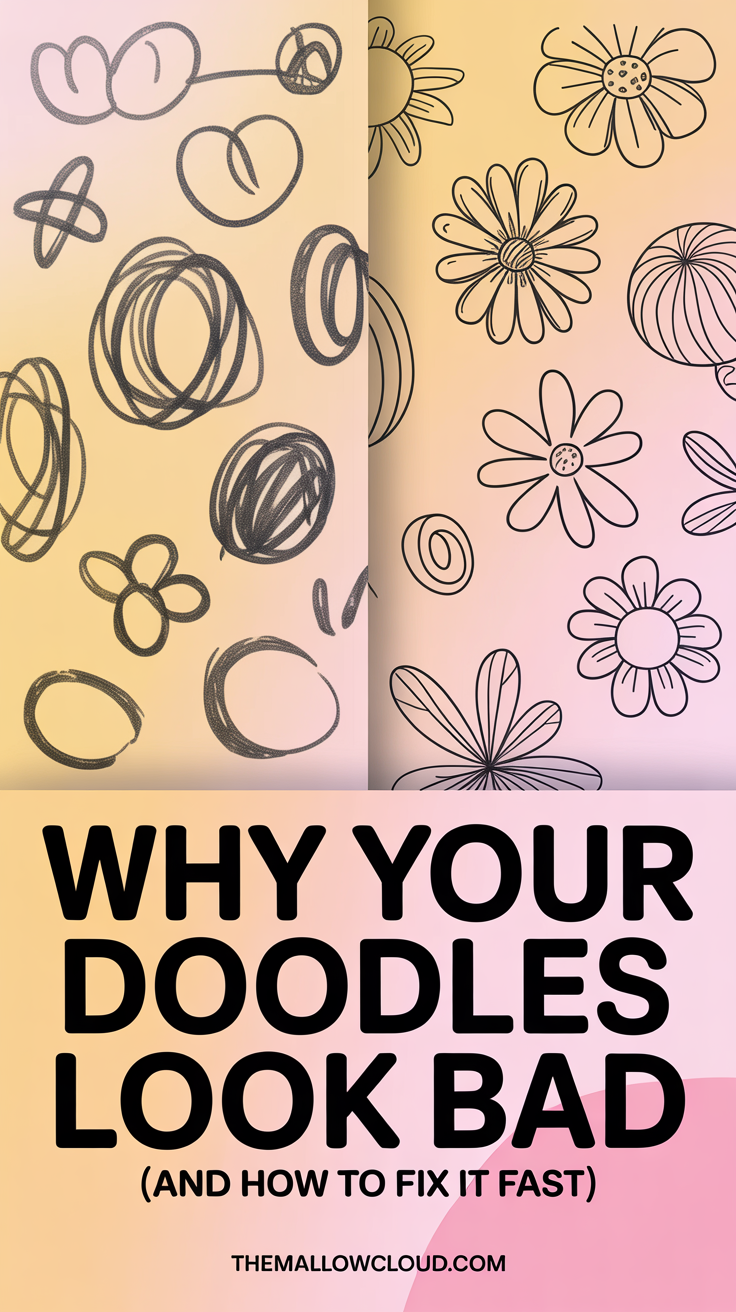
You slow down your hand, carefully control every movement, and try to draw “clean” lines. But instead of looking better, your doodles often end up looking stiff and unnatural. The lines feel forced, and the whole drawing loses that relaxed, effortless vibe that makes doodles look aesthetic.
The truth is, doodles are not supposed to be perfect. Slightly uneven lines, tiny imperfections, and small variations are exactly what give them character.
Fix it:
Try drawing a little faster than feels comfortable at first. Don’t overthink each line. Let your hand move more freely, even if it feels messy in the beginning. You’ll notice that your lines start to look softer and more natural almost immediately.
2. Your Shapes Are Too Complicated
Many beginners start with a simple idea, but then keep adding more and more details.
A flower suddenly needs realistic petals. A leaf gets extra lines, shading, and texture. What started as a doodle slowly turns into something complex, and that’s where it starts to feel overwhelming.
Doodles work best when they stay simple. The more details you add, the harder it becomes to keep everything balanced and clean.
Fix it:
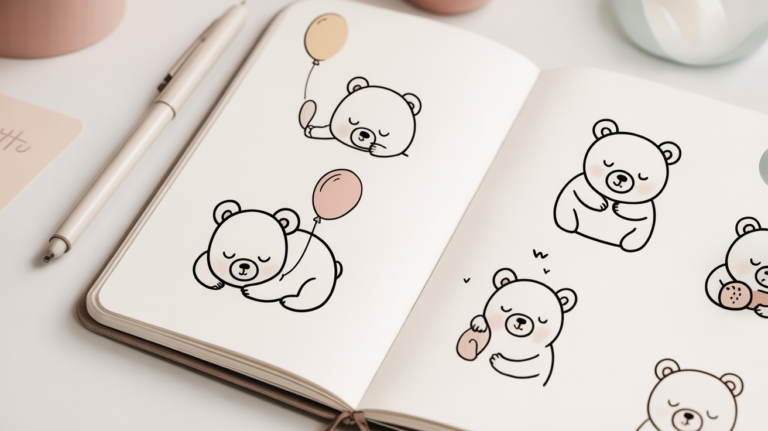
Break everything down into basic shapes. Instead of drawing a “perfect” object, think in simple forms. A flower can be just a circle with a few petals. A cloud can be a few soft curves. The goal is not realism, but clarity and ease.
When in doubt, always simplify.
3. You Don’t Repeat Enough
A single doodle on a page often looks a bit random or unfinished.
You draw one flower, one star, one shape, and then stop. The page feels empty, and something about it just doesn’t look cohesive.
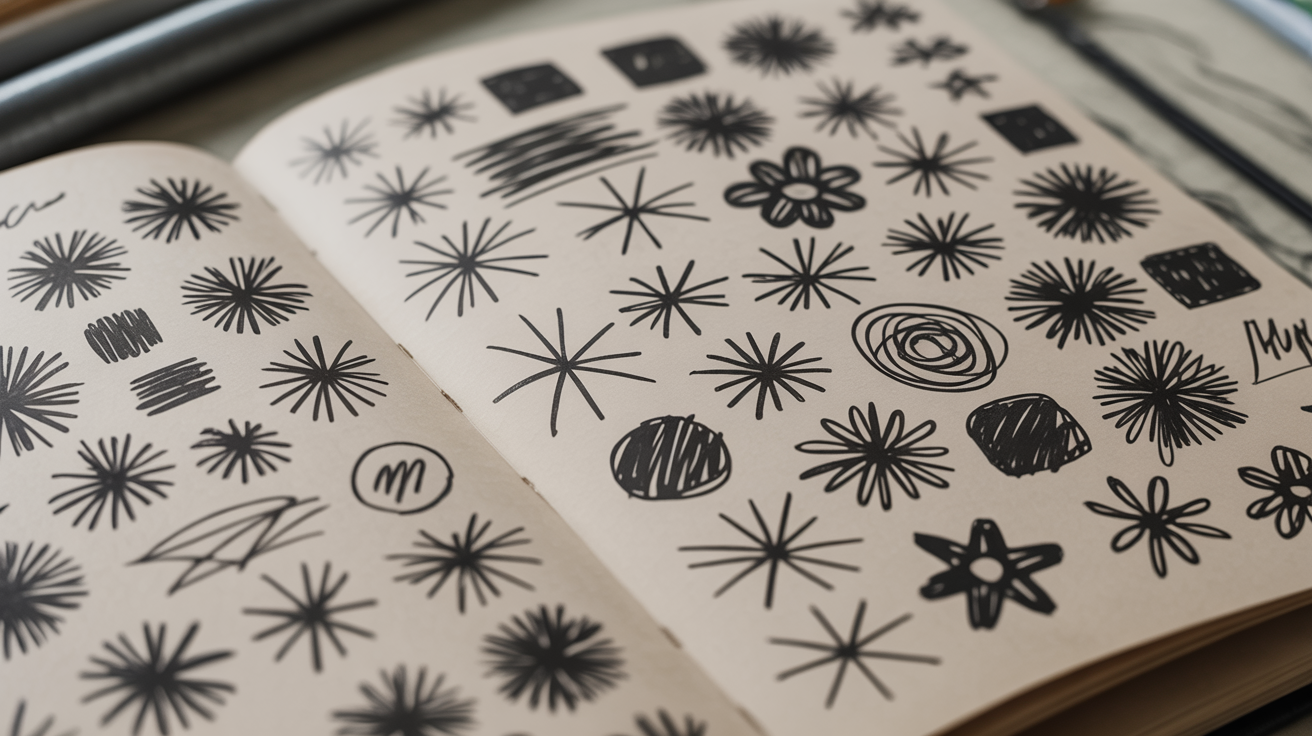
What you’re missing here is repetition. Repetition is what makes doodle pages look intentional and aesthetic.
Fix it:
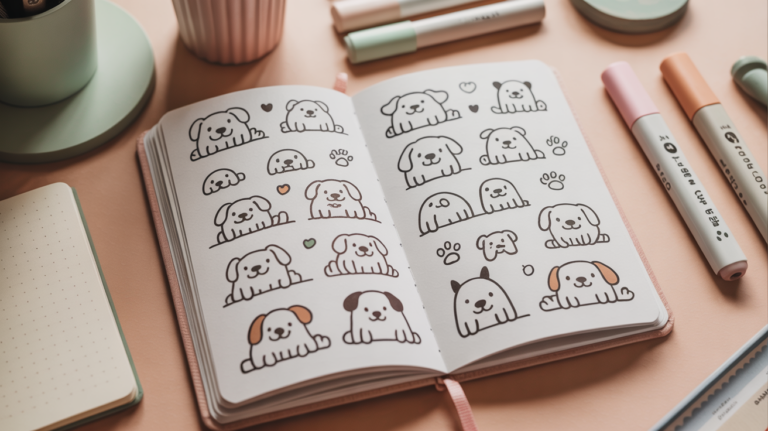
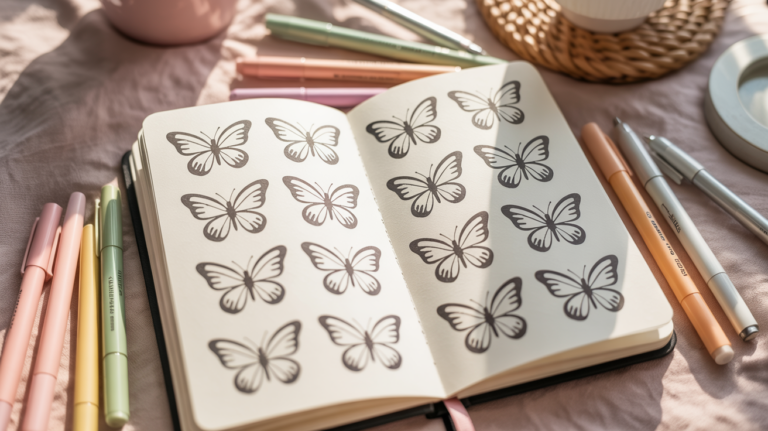
Take one simple doodle and repeat it several times. Draw it in rows, scatter it across the page, or vary the size slightly. This creates rhythm and makes your page feel more put together without adding complexity.
It’s one of the easiest ways to instantly improve how your doodles look.
4. Your Spacing Is Random
Sometimes your doodles are too close together, sometimes too far apart.
Even if each individual doodle looks fine, the overall page can still feel messy or unbalanced because the spacing isn’t consistent.
This is something many beginners don’t notice at first, but it makes a huge visual difference.
Fix it:
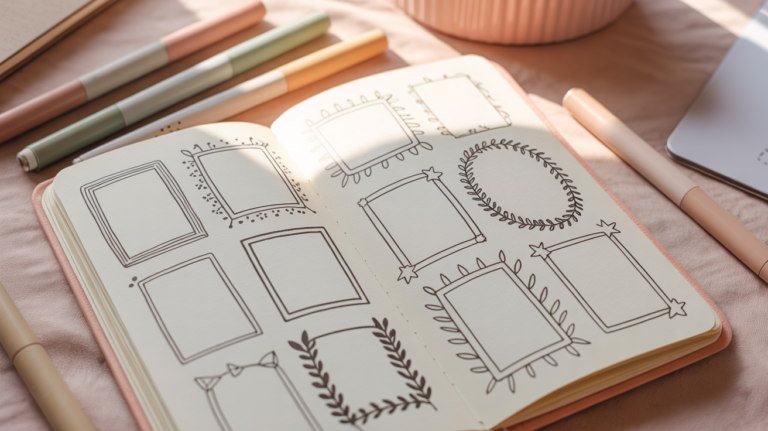
Try to leave similar amounts of space between each doodle. You don’t need to measure it perfectly, but aim for a consistent rhythm across the page.
You can even imagine an invisible grid to guide your placement. This small adjustment alone can make your doodles look instantly cleaner and more aesthetic.
5. You Press Too Hard
If you press too hard with your pen, your lines can look heavy and harsh.
This makes your doodles feel less relaxed and can also make mistakes more noticeable. It often happens when you’re nervous or trying to be very precise.
Fix it:
Loosen your grip slightly and use a lighter touch. Let the pen glide over the paper instead of pressing into it.
Lighter lines feel more effortless and give your doodles a softer, more balanced look.
:
6. You Compare Yourself Too Much
It’s so easy to open Pinterest, see perfectly clean doodles, and immediately feel like yours aren’t good enough.
You start noticing every little flaw in your lines. Your shapes feel uneven. Your page doesn’t look as polished. And suddenly, something that was supposed to be relaxing turns into frustration.
What most people forget is that those aesthetic doodles didn’t appear overnight. They are the result of many pages of practice, repetition, and small improvements over time.
When you compare your first attempts to someone else’s finished work, it will always feel discouraging.
Fix it:
Try to shift your focus away from comparison and back to your own progress. Instead of asking “Does this look as good as theirs?”, ask “Does this look better than my last page?”
Even small improvements count. A smoother line, better spacing, or a more confident shape is already progress. The more you stay in your own flow, the faster your doodles will naturally improve.
7. You Stop Too Early
You draw a few doodles, look at the page, and feel like something is missing. Instead of continuing, you stop because it doesn’t look “good enough” yet.
The problem is, many doodle pages only start to look cohesive once they are filled. A few isolated doodles often feel random, but a full page creates rhythm and balance.
Stopping too early keeps your doodles from ever reaching that point where everything comes together.
Fix it:
Keep going, even if the page doesn’t feel right at first. Add more small elements, repeat shapes, fill empty spaces with tiny details like dots or sparkles.
Often, what feels like a “bad” page in the beginning turns into a really aesthetic one once it’s complete. Give your doodles the chance to develop fully.
8. You Try to Draw Everything From Memory
You sit down, stare at the page, and try to come up with ideas on your own.
But instead of flowing naturally, your mind feels blank. You hesitate, second-guess your ideas, and nothing really comes together.
This doesn’t mean you’re not creative. It just means you’re putting too much pressure on yourself to invent everything from scratch.
Fix it:
Use references, especially in the beginning. Look at simple doodle ideas and recreate them in your own style.
You’re not copying, you’re learning. By repeating shapes and ideas, your brain builds a visual library. Over time, you’ll naturally start combining and creating your own variations without even thinking about it.
9. Your Lines Are Too Slow and Careful
It feels safer to draw slowly and carefully, especially when you want your doodles to look clean.
But drawing too slowly often has the opposite effect. Your lines become shaky, uneven, and overly controlled. Instead of looking smooth, they feel hesitant.
Doodles are meant to feel light and effortless, not stiff.
Fix it:
Try drawing your lines in one smooth motion instead of slowly tracing them. It might feel a bit uncomfortable at first, but it quickly leads to more confident and cleaner results.
Think of it as a quick, gentle movement rather than a careful construction. The more you trust your hand, the more natural your lines will look.
10. You Expect Instant Results
You start doodling and expect your page to look amazing right away.
When it doesn’t, it’s easy to feel like you’re doing something wrong or that doodling just isn’t for you.
But like any creative skill, doodling takes a bit of time to feel natural. The first few pages are often the messiest, and that’s completely normal.
Fix it:
Give yourself space to learn. Instead of expecting perfection, aim for progress. Focus on filling pages, trying simple ideas, and getting comfortable with your pen.
You’ll be surprised how quickly things start to improve once you let go of the pressure. After just a few sessions, your doodles will already feel more confident and balanced.
Your Doodles Aren’t Bad — They’re Just in Progress
If your doodles don’t look the way you want yet, it doesn’t mean you’re doing something wrong. It simply means you’re at the beginning, and that stage always feels a little uneven.
Every shaky line, every imperfect shape, and every “messy” page is part of the process. Those small imperfections aren’t mistakes, they’re signs that you’re learning, experimenting, and getting more comfortable with each stroke.
The moment you stop chasing perfection and start focusing on simple shapes, repetition, and flow, everything begins to shift. Your lines feel more natural, your pages look more balanced, and doodling becomes something you actually enjoy instead of something you judge.
So don’t try to fix everything at once. Pick one small thing, draw a little looser, repeat a shape more often, or simply keep going for a few extra minutes.
That’s how improvement happens.
And before you know it, the doodles you once thought looked “bad” will turn into pages you genuinely love creating.